


Home
Out There: The Transcendent Life and Art of Burt Shonberg
Barnes and Noble
Loading Inventory...
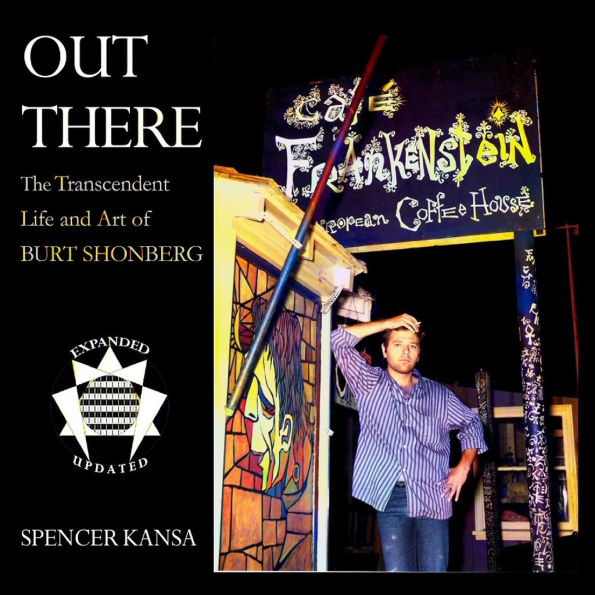
Out There: The Transcendent Life and Art of Burt Shonberg in Bloomington, MN
Current price: $45.00

Out There: The Transcendent Life and Art of Burt Shonberg in Bloomington, MN
Current price: $45.00
Loading Inventory...
Size: OS
From the late 1950s until his premature death in 1977, Burt Shonberg was one of the most highly admired artists in Los Angeles. During this period, his eye-popping murals graced the facades and interiors of popular coffeehouses and hip clubs on the Sunset Strip, his paintings adorned several notable rock album covers, and his haunting portraits featured prominently in Roger Corman's film adaptations of Edgar Allan Poe's
The Fall of the House of Usher
and
The Premature Burial
.
Born in 1933, Shonberg grew up in the all-American beach town of Revere, Massachusetts, where, according to his friends, he spent most of his time drawing and indulging in his love of monster movies. After graduating high school, he studied for two years at the Boston Museum of Fine Art, and then, after a brief spell in the army, he ventured to Los Angeles to pursue a career as a commercial artist.
Soon after he settled in L.A., Shonberg became the lover of the legendary occult artist Marjorie Cameron who introduced him to the teachings of Aleister Crowley and turned him on to the mind-warping properties of peyote. Shonberg also embraced the Fourth Way system of George Ivanovich Gurdjieff, and his canvases began to reflect the mystical illumination inspired by his higher states of consciousness.
In 1960, the artist was chosen by Dr. Oscar Janiger to participate in his radical study into the effects of LSD-25 on the creative process. Although Shonberg regarded himself as a magical realist, his remarkable renderings of his hallucinogenic visions led many of his acolytes to regard him as the pre-eminent psychedelic artist of the era, and in the words of his friend and fellow painter Walter Teller, "Burt was
the
artist of Laurel Canyon."
Yet despite his popularity and status, Shonberg's artistry has been criminally overlooked in all historical accounts of the Southern Californian art scene, until now.
Out There
redresses this injustice and brings some long-overdue recognition to L.A.'s greatest lost artist in a book illustrated with rare examples of his incandescent artwork.
The Fall of the House of Usher
and
The Premature Burial
.
Born in 1933, Shonberg grew up in the all-American beach town of Revere, Massachusetts, where, according to his friends, he spent most of his time drawing and indulging in his love of monster movies. After graduating high school, he studied for two years at the Boston Museum of Fine Art, and then, after a brief spell in the army, he ventured to Los Angeles to pursue a career as a commercial artist.
Soon after he settled in L.A., Shonberg became the lover of the legendary occult artist Marjorie Cameron who introduced him to the teachings of Aleister Crowley and turned him on to the mind-warping properties of peyote. Shonberg also embraced the Fourth Way system of George Ivanovich Gurdjieff, and his canvases began to reflect the mystical illumination inspired by his higher states of consciousness.
In 1960, the artist was chosen by Dr. Oscar Janiger to participate in his radical study into the effects of LSD-25 on the creative process. Although Shonberg regarded himself as a magical realist, his remarkable renderings of his hallucinogenic visions led many of his acolytes to regard him as the pre-eminent psychedelic artist of the era, and in the words of his friend and fellow painter Walter Teller, "Burt was
the
artist of Laurel Canyon."
Yet despite his popularity and status, Shonberg's artistry has been criminally overlooked in all historical accounts of the Southern Californian art scene, until now.
Out There
redresses this injustice and brings some long-overdue recognition to L.A.'s greatest lost artist in a book illustrated with rare examples of his incandescent artwork.
From the late 1950s until his premature death in 1977, Burt Shonberg was one of the most highly admired artists in Los Angeles. During this period, his eye-popping murals graced the facades and interiors of popular coffeehouses and hip clubs on the Sunset Strip, his paintings adorned several notable rock album covers, and his haunting portraits featured prominently in Roger Corman's film adaptations of Edgar Allan Poe's
The Fall of the House of Usher
and
The Premature Burial
.
Born in 1933, Shonberg grew up in the all-American beach town of Revere, Massachusetts, where, according to his friends, he spent most of his time drawing and indulging in his love of monster movies. After graduating high school, he studied for two years at the Boston Museum of Fine Art, and then, after a brief spell in the army, he ventured to Los Angeles to pursue a career as a commercial artist.
Soon after he settled in L.A., Shonberg became the lover of the legendary occult artist Marjorie Cameron who introduced him to the teachings of Aleister Crowley and turned him on to the mind-warping properties of peyote. Shonberg also embraced the Fourth Way system of George Ivanovich Gurdjieff, and his canvases began to reflect the mystical illumination inspired by his higher states of consciousness.
In 1960, the artist was chosen by Dr. Oscar Janiger to participate in his radical study into the effects of LSD-25 on the creative process. Although Shonberg regarded himself as a magical realist, his remarkable renderings of his hallucinogenic visions led many of his acolytes to regard him as the pre-eminent psychedelic artist of the era, and in the words of his friend and fellow painter Walter Teller, "Burt was
the
artist of Laurel Canyon."
Yet despite his popularity and status, Shonberg's artistry has been criminally overlooked in all historical accounts of the Southern Californian art scene, until now.
Out There
redresses this injustice and brings some long-overdue recognition to L.A.'s greatest lost artist in a book illustrated with rare examples of his incandescent artwork.
The Fall of the House of Usher
and
The Premature Burial
.
Born in 1933, Shonberg grew up in the all-American beach town of Revere, Massachusetts, where, according to his friends, he spent most of his time drawing and indulging in his love of monster movies. After graduating high school, he studied for two years at the Boston Museum of Fine Art, and then, after a brief spell in the army, he ventured to Los Angeles to pursue a career as a commercial artist.
Soon after he settled in L.A., Shonberg became the lover of the legendary occult artist Marjorie Cameron who introduced him to the teachings of Aleister Crowley and turned him on to the mind-warping properties of peyote. Shonberg also embraced the Fourth Way system of George Ivanovich Gurdjieff, and his canvases began to reflect the mystical illumination inspired by his higher states of consciousness.
In 1960, the artist was chosen by Dr. Oscar Janiger to participate in his radical study into the effects of LSD-25 on the creative process. Although Shonberg regarded himself as a magical realist, his remarkable renderings of his hallucinogenic visions led many of his acolytes to regard him as the pre-eminent psychedelic artist of the era, and in the words of his friend and fellow painter Walter Teller, "Burt was
the
artist of Laurel Canyon."
Yet despite his popularity and status, Shonberg's artistry has been criminally overlooked in all historical accounts of the Southern Californian art scene, until now.
Out There
redresses this injustice and brings some long-overdue recognition to L.A.'s greatest lost artist in a book illustrated with rare examples of his incandescent artwork.
Shop Similar Products











Find at Mall of America® in Bloomington, MN
Visit at Mall of America® in Bloomington, MN