


Home
Optimization of the Electron Donor Supply to Sulphate Reducing Bioreactors Treating Inorganic Wastewater
Barnes and Noble
Loading Inventory...
Optimization of the Electron Donor Supply to Sulphate Reducing Bioreactors Treating Inorganic Wastewater in Bloomington, MN
Current price: $84.99

Optimization of the Electron Donor Supply to Sulphate Reducing Bioreactors Treating Inorganic Wastewater in Bloomington, MN
Current price: $84.99
Loading Inventory...
Size: Paperback
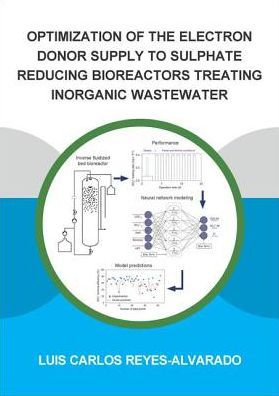
The main objective of this research was to optimize the electron donor supply in sulphate reducing bioreactors treating sulphate rich wastewater. Two types of electron donor were tested: lactate and slow release electron donors such as carbohydrate based polymers and lignocellulosic biowastes. Biological sulphate reduction was evaluated in different bioreactor configurations: the inverse fluidized bed, sequencing batch and batch reactors. The reactors were tested under steady-state, high-rate and transient-state feeding conditions of electron donor and acceptor, respectively. The results showed that the inverse fluidized bed reactor configuration is robust and resilient to transient and high-rate feeding conditions at a hydraulic retention time as low as 0.125 d. The biological sulphate reduction was limited by the COD:sulphate ratio (
The main objective of this research was to optimize the electron donor supply in sulphate reducing bioreactors treating sulphate rich wastewater. Two types of electron donor were tested: lactate and slow release electron donors such as carbohydrate based polymers and lignocellulosic biowastes. Biological sulphate reduction was evaluated in different bioreactor configurations: the inverse fluidized bed, sequencing batch and batch reactors. The reactors were tested under steady-state, high-rate and transient-state feeding conditions of electron donor and acceptor, respectively. The results showed that the inverse fluidized bed reactor configuration is robust and resilient to transient and high-rate feeding conditions at a hydraulic retention time as low as 0.125 d. The biological sulphate reduction was limited by the COD:sulphate ratio (
Shop Similar Products








Find at Mall of America® in Bloomington, MN
Visit at Mall of America® in Bloomington, MN