


Home
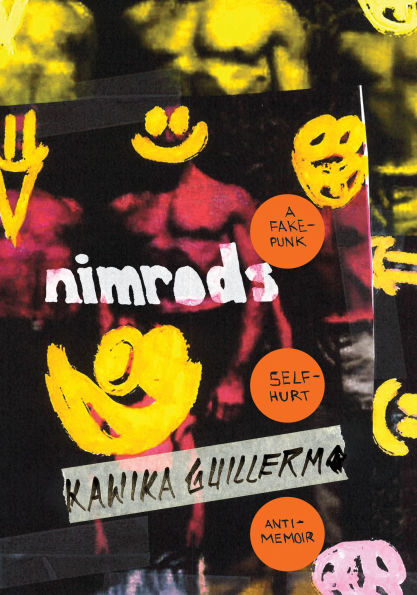
Nimrods: a fake-punk self-hurt anti-memoir
Barnes and Noble
Loading Inventory...
Nimrods: a fake-punk self-hurt anti-memoir in Bloomington, MN
Current price: $19.95
Nimrods: a fake-punk self-hurt anti-memoir in Bloomington, MN
Current price: $19.95
Loading Inventory...
Size: OS
In
Nimrods
, Kawika Guillermo chronicles the agonizing absurdities of being a newly minted professor (and overtired father) hired to teach in a Social Justice Institute while haunted by the inner ghosts of patriarchy, racial pessimism, and imperial arrogance. Charged with the “personal is political” mandate of feminist critique, Guillermo honestly and powerfully recounts his wayward path, from being raised by two preachers’ kids in a chaotic mixedrace family to his uncle’s death from HIVrelated illness, which helped prompt his parents' divorce and his mother’s move to Las Vegas, to his many attempts to flee from American gender, racial, and religious norms by immigrating to South Korea, China, Hong Kong, and Canada. Through an often crass, cringey, and raw hybrid prosepoetic style, Guillermo reflects on anger, alcoholism, and suicidal ideation—traits that do not simply vanish after one is cast into the treacherous role of fatherhood or the dreaded role of professor. Guillermo’s shameless mixtures of autotheory, queer punk poetry, musical ekphrasis, haibun, academic (mis)quotations, and bad dad jokes present a bold new take on the autobiography: the fakepunk selfhurt antimemoir.
Nimrods
, Kawika Guillermo chronicles the agonizing absurdities of being a newly minted professor (and overtired father) hired to teach in a Social Justice Institute while haunted by the inner ghosts of patriarchy, racial pessimism, and imperial arrogance. Charged with the “personal is political” mandate of feminist critique, Guillermo honestly and powerfully recounts his wayward path, from being raised by two preachers’ kids in a chaotic mixedrace family to his uncle’s death from HIVrelated illness, which helped prompt his parents' divorce and his mother’s move to Las Vegas, to his many attempts to flee from American gender, racial, and religious norms by immigrating to South Korea, China, Hong Kong, and Canada. Through an often crass, cringey, and raw hybrid prosepoetic style, Guillermo reflects on anger, alcoholism, and suicidal ideation—traits that do not simply vanish after one is cast into the treacherous role of fatherhood or the dreaded role of professor. Guillermo’s shameless mixtures of autotheory, queer punk poetry, musical ekphrasis, haibun, academic (mis)quotations, and bad dad jokes present a bold new take on the autobiography: the fakepunk selfhurt antimemoir.
In
Nimrods
, Kawika Guillermo chronicles the agonizing absurdities of being a newly minted professor (and overtired father) hired to teach in a Social Justice Institute while haunted by the inner ghosts of patriarchy, racial pessimism, and imperial arrogance. Charged with the “personal is political” mandate of feminist critique, Guillermo honestly and powerfully recounts his wayward path, from being raised by two preachers’ kids in a chaotic mixedrace family to his uncle’s death from HIVrelated illness, which helped prompt his parents' divorce and his mother’s move to Las Vegas, to his many attempts to flee from American gender, racial, and religious norms by immigrating to South Korea, China, Hong Kong, and Canada. Through an often crass, cringey, and raw hybrid prosepoetic style, Guillermo reflects on anger, alcoholism, and suicidal ideation—traits that do not simply vanish after one is cast into the treacherous role of fatherhood or the dreaded role of professor. Guillermo’s shameless mixtures of autotheory, queer punk poetry, musical ekphrasis, haibun, academic (mis)quotations, and bad dad jokes present a bold new take on the autobiography: the fakepunk selfhurt antimemoir.
Nimrods
, Kawika Guillermo chronicles the agonizing absurdities of being a newly minted professor (and overtired father) hired to teach in a Social Justice Institute while haunted by the inner ghosts of patriarchy, racial pessimism, and imperial arrogance. Charged with the “personal is political” mandate of feminist critique, Guillermo honestly and powerfully recounts his wayward path, from being raised by two preachers’ kids in a chaotic mixedrace family to his uncle’s death from HIVrelated illness, which helped prompt his parents' divorce and his mother’s move to Las Vegas, to his many attempts to flee from American gender, racial, and religious norms by immigrating to South Korea, China, Hong Kong, and Canada. Through an often crass, cringey, and raw hybrid prosepoetic style, Guillermo reflects on anger, alcoholism, and suicidal ideation—traits that do not simply vanish after one is cast into the treacherous role of fatherhood or the dreaded role of professor. Guillermo’s shameless mixtures of autotheory, queer punk poetry, musical ekphrasis, haibun, academic (mis)quotations, and bad dad jokes present a bold new take on the autobiography: the fakepunk selfhurt antimemoir.
Shop Similar Products











Find at Mall of America® in Bloomington, MN
Visit at Mall of America® in Bloomington, MN