


Home
Nick of Time
Barnes and Noble
Loading Inventory...
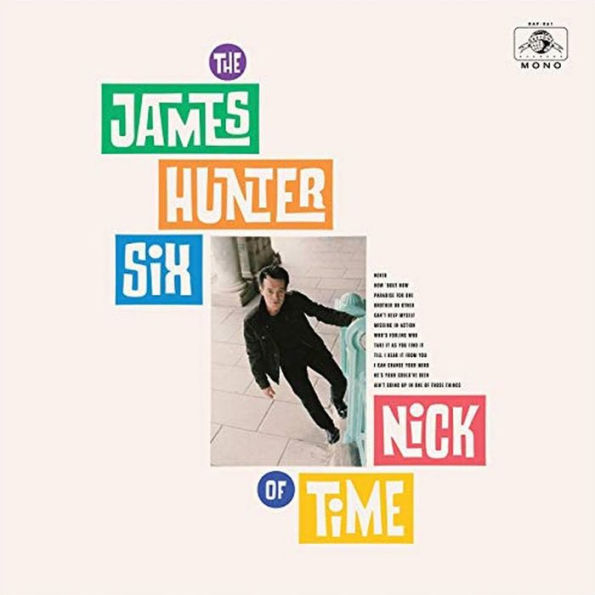
Nick of Time in Bloomington, MN
Current price: $15.99

Nick of Time in Bloomington, MN
Current price: $15.99
Loading Inventory...
Size: CD
Since the 1980s, exemplary British R&B singer, songwriter, and guitarist
James Hunter
has been plying his trade with his own bands, first with
Howlin' Wilf and the Vee-Jays
and then with the
James Hunter Six
. He's also accompanied some of his very famous friends like
Van Morrison
(you can hear
Hunter
on
Days Like This
and
A Night in San Francisco
).
Nick of Time
mark's the artist's fourth collaboration with
Daptone
producer
Bosco Mann
(
Gabriel Roth
), and his third full-length for the label. As ever, his music remains rooted in historic rhythm and blues, doo wop, and soul, but
expands his range here to include cha cha, rhumba, and swing rhythms. He also hired a new cast of American players to be the second edition of the
.
Opener and first single "I Can Change Your Mind" is a delightful midtempo rhumba that tips its hat to early
King
/
Federal
jukebox releases with a twist:
phrases like a soul crooner in front of a Hammond B-3 and a grooving tenor and baritone sax vamp. It's followed by "Who's Fooling Who," a lithe Latin soul ballad wherein
's honeyed, whiskey-tinged voice recalls
Sam Cooke
's. "Til I Hear from You" employs a tricky Latin-ized 5/4 vamp that directly references the
Dave Brubeck Quartet
's "Take Five," but grafts
Ben E. King
-styled doo wop into the lead and chorus-line backing vocals. The title cut is an early rock and soul dancefloor slipper with gorgeous harmony vocals.
's singing nods at the examples of
Jackie Wilson
Gene Chandler
. Check the use of
Ray Charles
in the scorching "You'll Never Get Me Up in One of Those," (where a hard-swinging jazzy horn chart meets the sound of early Detroit gospel and the bumping soul-blues of
Magic Sam
. "Can't Help Myself" is a rhumba strut crossed with the inspiration of L.A.'s Central Avenue jazz scene and drugstore doo wop. And speaking of jazz, "Paradise of One" seems to wed the breezy swing of
Nat King Cole
's late-'40s pop work with
Mose Allison
's lyric and rhythmic sensibilities. The tom-tom-heavy "He's Your Could Have Been," touches on Latin-infused R&B from
Cosimo Matassa
's legendary 1950s studio in New Orleans.
showcases
at his most expressive and sophisticated as a singer, songwriter, and as an arranger. He juxtaposes styles and genres effortlessly; his imagination places things in direct relation that normally don't come within striking distance of one another. The band executes them with a streamlined, live, and crackling energy that undergirds the vulnerable honesty and truth in his lyrics and singing. Thanks to the caliber of players in the new
, he is challenged and supported in equal measure. While
may be unapologetically retro in his inspirations, he is unrelentingly modern in his use of vintage music; for him it is ever present in the music he makes, and that's the exact opposite of being nostalgic. ~ Thom Jurek
James Hunter
has been plying his trade with his own bands, first with
Howlin' Wilf and the Vee-Jays
and then with the
James Hunter Six
. He's also accompanied some of his very famous friends like
Van Morrison
(you can hear
Hunter
on
Days Like This
and
A Night in San Francisco
).
Nick of Time
mark's the artist's fourth collaboration with
Daptone
producer
Bosco Mann
(
Gabriel Roth
), and his third full-length for the label. As ever, his music remains rooted in historic rhythm and blues, doo wop, and soul, but
expands his range here to include cha cha, rhumba, and swing rhythms. He also hired a new cast of American players to be the second edition of the
.
Opener and first single "I Can Change Your Mind" is a delightful midtempo rhumba that tips its hat to early
King
/
Federal
jukebox releases with a twist:
phrases like a soul crooner in front of a Hammond B-3 and a grooving tenor and baritone sax vamp. It's followed by "Who's Fooling Who," a lithe Latin soul ballad wherein
's honeyed, whiskey-tinged voice recalls
Sam Cooke
's. "Til I Hear from You" employs a tricky Latin-ized 5/4 vamp that directly references the
Dave Brubeck Quartet
's "Take Five," but grafts
Ben E. King
-styled doo wop into the lead and chorus-line backing vocals. The title cut is an early rock and soul dancefloor slipper with gorgeous harmony vocals.
's singing nods at the examples of
Jackie Wilson
Gene Chandler
. Check the use of
Ray Charles
in the scorching "You'll Never Get Me Up in One of Those," (where a hard-swinging jazzy horn chart meets the sound of early Detroit gospel and the bumping soul-blues of
Magic Sam
. "Can't Help Myself" is a rhumba strut crossed with the inspiration of L.A.'s Central Avenue jazz scene and drugstore doo wop. And speaking of jazz, "Paradise of One" seems to wed the breezy swing of
Nat King Cole
's late-'40s pop work with
Mose Allison
's lyric and rhythmic sensibilities. The tom-tom-heavy "He's Your Could Have Been," touches on Latin-infused R&B from
Cosimo Matassa
's legendary 1950s studio in New Orleans.
showcases
at his most expressive and sophisticated as a singer, songwriter, and as an arranger. He juxtaposes styles and genres effortlessly; his imagination places things in direct relation that normally don't come within striking distance of one another. The band executes them with a streamlined, live, and crackling energy that undergirds the vulnerable honesty and truth in his lyrics and singing. Thanks to the caliber of players in the new
, he is challenged and supported in equal measure. While
may be unapologetically retro in his inspirations, he is unrelentingly modern in his use of vintage music; for him it is ever present in the music he makes, and that's the exact opposite of being nostalgic. ~ Thom Jurek
Since the 1980s, exemplary British R&B singer, songwriter, and guitarist
James Hunter
has been plying his trade with his own bands, first with
Howlin' Wilf and the Vee-Jays
and then with the
James Hunter Six
. He's also accompanied some of his very famous friends like
Van Morrison
(you can hear
Hunter
on
Days Like This
and
A Night in San Francisco
).
Nick of Time
mark's the artist's fourth collaboration with
Daptone
producer
Bosco Mann
(
Gabriel Roth
), and his third full-length for the label. As ever, his music remains rooted in historic rhythm and blues, doo wop, and soul, but
expands his range here to include cha cha, rhumba, and swing rhythms. He also hired a new cast of American players to be the second edition of the
.
Opener and first single "I Can Change Your Mind" is a delightful midtempo rhumba that tips its hat to early
King
/
Federal
jukebox releases with a twist:
phrases like a soul crooner in front of a Hammond B-3 and a grooving tenor and baritone sax vamp. It's followed by "Who's Fooling Who," a lithe Latin soul ballad wherein
's honeyed, whiskey-tinged voice recalls
Sam Cooke
's. "Til I Hear from You" employs a tricky Latin-ized 5/4 vamp that directly references the
Dave Brubeck Quartet
's "Take Five," but grafts
Ben E. King
-styled doo wop into the lead and chorus-line backing vocals. The title cut is an early rock and soul dancefloor slipper with gorgeous harmony vocals.
's singing nods at the examples of
Jackie Wilson
Gene Chandler
. Check the use of
Ray Charles
in the scorching "You'll Never Get Me Up in One of Those," (where a hard-swinging jazzy horn chart meets the sound of early Detroit gospel and the bumping soul-blues of
Magic Sam
. "Can't Help Myself" is a rhumba strut crossed with the inspiration of L.A.'s Central Avenue jazz scene and drugstore doo wop. And speaking of jazz, "Paradise of One" seems to wed the breezy swing of
Nat King Cole
's late-'40s pop work with
Mose Allison
's lyric and rhythmic sensibilities. The tom-tom-heavy "He's Your Could Have Been," touches on Latin-infused R&B from
Cosimo Matassa
's legendary 1950s studio in New Orleans.
showcases
at his most expressive and sophisticated as a singer, songwriter, and as an arranger. He juxtaposes styles and genres effortlessly; his imagination places things in direct relation that normally don't come within striking distance of one another. The band executes them with a streamlined, live, and crackling energy that undergirds the vulnerable honesty and truth in his lyrics and singing. Thanks to the caliber of players in the new
, he is challenged and supported in equal measure. While
may be unapologetically retro in his inspirations, he is unrelentingly modern in his use of vintage music; for him it is ever present in the music he makes, and that's the exact opposite of being nostalgic. ~ Thom Jurek
James Hunter
has been plying his trade with his own bands, first with
Howlin' Wilf and the Vee-Jays
and then with the
James Hunter Six
. He's also accompanied some of his very famous friends like
Van Morrison
(you can hear
Hunter
on
Days Like This
and
A Night in San Francisco
).
Nick of Time
mark's the artist's fourth collaboration with
Daptone
producer
Bosco Mann
(
Gabriel Roth
), and his third full-length for the label. As ever, his music remains rooted in historic rhythm and blues, doo wop, and soul, but
expands his range here to include cha cha, rhumba, and swing rhythms. He also hired a new cast of American players to be the second edition of the
.
Opener and first single "I Can Change Your Mind" is a delightful midtempo rhumba that tips its hat to early
King
/
Federal
jukebox releases with a twist:
phrases like a soul crooner in front of a Hammond B-3 and a grooving tenor and baritone sax vamp. It's followed by "Who's Fooling Who," a lithe Latin soul ballad wherein
's honeyed, whiskey-tinged voice recalls
Sam Cooke
's. "Til I Hear from You" employs a tricky Latin-ized 5/4 vamp that directly references the
Dave Brubeck Quartet
's "Take Five," but grafts
Ben E. King
-styled doo wop into the lead and chorus-line backing vocals. The title cut is an early rock and soul dancefloor slipper with gorgeous harmony vocals.
's singing nods at the examples of
Jackie Wilson
Gene Chandler
. Check the use of
Ray Charles
in the scorching "You'll Never Get Me Up in One of Those," (where a hard-swinging jazzy horn chart meets the sound of early Detroit gospel and the bumping soul-blues of
Magic Sam
. "Can't Help Myself" is a rhumba strut crossed with the inspiration of L.A.'s Central Avenue jazz scene and drugstore doo wop. And speaking of jazz, "Paradise of One" seems to wed the breezy swing of
Nat King Cole
's late-'40s pop work with
Mose Allison
's lyric and rhythmic sensibilities. The tom-tom-heavy "He's Your Could Have Been," touches on Latin-infused R&B from
Cosimo Matassa
's legendary 1950s studio in New Orleans.
showcases
at his most expressive and sophisticated as a singer, songwriter, and as an arranger. He juxtaposes styles and genres effortlessly; his imagination places things in direct relation that normally don't come within striking distance of one another. The band executes them with a streamlined, live, and crackling energy that undergirds the vulnerable honesty and truth in his lyrics and singing. Thanks to the caliber of players in the new
, he is challenged and supported in equal measure. While
may be unapologetically retro in his inspirations, he is unrelentingly modern in his use of vintage music; for him it is ever present in the music he makes, and that's the exact opposite of being nostalgic. ~ Thom Jurek









Find at Mall of America® in Bloomington, MN
Visit at Mall of America® in Bloomington, MN