


Home
Murphy's Heart
Barnes and Noble
Loading Inventory...
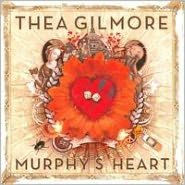
Murphy's Heart in Bloomington, MN
Current price: $17.99
Murphy's Heart in Bloomington, MN
Current price: $17.99
Loading Inventory...
Size: OS
Murphy's Heart
, the eleventh studio offering from singer and songwriter
Thea Gilmore
, finds a balance between the extreme polish of 2008's
Liejacker
and the skeletal sound of 2006's
Harpo's Ghost
. Produced (again) by lead guitarist
Nigel Stonier
,
Gilmore
fills the songs on this 13-track set with the talents of 13 musicians, including horn and string players, percussionists, and keyboardists. The expanded cast reflects
's evolving songwriting and arranging skills; forms and textures have deepened and changed shapes, and the textures she and
Stonier
employ are more ambitious than anything she's previously attempted, but whether they touch on the perverse carnival soundscapes of
Tom Waits
(in
"Jazz Hands"
) or are elegantly adorned
("Due South
), they contain only what they need in order to project and illuminate her stiletto sharp -- often mischievous -- lyrics. The set opens with
"This Town,"
introduced by a strutting Celtic blues guitar line that quickly becomes a shuffling, minor-key jazz swagger as
illustrates a physical place as femme fatale: "Hello my little train wreck, I am your worst fear/I'm a mortuary postcard, I'm a graveyard souvenir." On
"Love's the Greatest Instrument of Rage,"
drums, dulcimers, and handclaps fuel
's spitfire delivery on what could be a drinking song, albeit one of indignation and regret: "So take this epitaph, take anything that's left/I don't want to be here come the day/I did my best you know, I tried to swim the tide/But I am just as guilty in my way...." On the lilting acoustic waltz
"Automatic Blue,"
her protagonist observes the eternal paradox of romance: "Love is either wild frontiers, or automatic blue."
"Mexico"
is as lonely as its title, adorned by nylon string guitars, viola, and cello, while the album's closer
"Wondrous Thing,"
with its Latin percussion and sparse electric six-string, underscores an early rock melody and a lyric worthy of
Doc Pomus
: "The moment you came/The stars didn't sing your name/And the heavens didn't shed your skin/Smallest of things/Bravest of offerings/The way that love begins." With the lithe, languid fluegelhorn in the backdrop, the song enters the realm of dreams.
is the work of a seasoned veteran at lofty creative peak in her craft. ~ Thom Jurek
, the eleventh studio offering from singer and songwriter
Thea Gilmore
, finds a balance between the extreme polish of 2008's
Liejacker
and the skeletal sound of 2006's
Harpo's Ghost
. Produced (again) by lead guitarist
Nigel Stonier
,
Gilmore
fills the songs on this 13-track set with the talents of 13 musicians, including horn and string players, percussionists, and keyboardists. The expanded cast reflects
's evolving songwriting and arranging skills; forms and textures have deepened and changed shapes, and the textures she and
Stonier
employ are more ambitious than anything she's previously attempted, but whether they touch on the perverse carnival soundscapes of
Tom Waits
(in
"Jazz Hands"
) or are elegantly adorned
("Due South
), they contain only what they need in order to project and illuminate her stiletto sharp -- often mischievous -- lyrics. The set opens with
"This Town,"
introduced by a strutting Celtic blues guitar line that quickly becomes a shuffling, minor-key jazz swagger as
illustrates a physical place as femme fatale: "Hello my little train wreck, I am your worst fear/I'm a mortuary postcard, I'm a graveyard souvenir." On
"Love's the Greatest Instrument of Rage,"
drums, dulcimers, and handclaps fuel
's spitfire delivery on what could be a drinking song, albeit one of indignation and regret: "So take this epitaph, take anything that's left/I don't want to be here come the day/I did my best you know, I tried to swim the tide/But I am just as guilty in my way...." On the lilting acoustic waltz
"Automatic Blue,"
her protagonist observes the eternal paradox of romance: "Love is either wild frontiers, or automatic blue."
"Mexico"
is as lonely as its title, adorned by nylon string guitars, viola, and cello, while the album's closer
"Wondrous Thing,"
with its Latin percussion and sparse electric six-string, underscores an early rock melody and a lyric worthy of
Doc Pomus
: "The moment you came/The stars didn't sing your name/And the heavens didn't shed your skin/Smallest of things/Bravest of offerings/The way that love begins." With the lithe, languid fluegelhorn in the backdrop, the song enters the realm of dreams.
is the work of a seasoned veteran at lofty creative peak in her craft. ~ Thom Jurek
Murphy's Heart
, the eleventh studio offering from singer and songwriter
Thea Gilmore
, finds a balance between the extreme polish of 2008's
Liejacker
and the skeletal sound of 2006's
Harpo's Ghost
. Produced (again) by lead guitarist
Nigel Stonier
,
Gilmore
fills the songs on this 13-track set with the talents of 13 musicians, including horn and string players, percussionists, and keyboardists. The expanded cast reflects
's evolving songwriting and arranging skills; forms and textures have deepened and changed shapes, and the textures she and
Stonier
employ are more ambitious than anything she's previously attempted, but whether they touch on the perverse carnival soundscapes of
Tom Waits
(in
"Jazz Hands"
) or are elegantly adorned
("Due South
), they contain only what they need in order to project and illuminate her stiletto sharp -- often mischievous -- lyrics. The set opens with
"This Town,"
introduced by a strutting Celtic blues guitar line that quickly becomes a shuffling, minor-key jazz swagger as
illustrates a physical place as femme fatale: "Hello my little train wreck, I am your worst fear/I'm a mortuary postcard, I'm a graveyard souvenir." On
"Love's the Greatest Instrument of Rage,"
drums, dulcimers, and handclaps fuel
's spitfire delivery on what could be a drinking song, albeit one of indignation and regret: "So take this epitaph, take anything that's left/I don't want to be here come the day/I did my best you know, I tried to swim the tide/But I am just as guilty in my way...." On the lilting acoustic waltz
"Automatic Blue,"
her protagonist observes the eternal paradox of romance: "Love is either wild frontiers, or automatic blue."
"Mexico"
is as lonely as its title, adorned by nylon string guitars, viola, and cello, while the album's closer
"Wondrous Thing,"
with its Latin percussion and sparse electric six-string, underscores an early rock melody and a lyric worthy of
Doc Pomus
: "The moment you came/The stars didn't sing your name/And the heavens didn't shed your skin/Smallest of things/Bravest of offerings/The way that love begins." With the lithe, languid fluegelhorn in the backdrop, the song enters the realm of dreams.
is the work of a seasoned veteran at lofty creative peak in her craft. ~ Thom Jurek
, the eleventh studio offering from singer and songwriter
Thea Gilmore
, finds a balance between the extreme polish of 2008's
Liejacker
and the skeletal sound of 2006's
Harpo's Ghost
. Produced (again) by lead guitarist
Nigel Stonier
,
Gilmore
fills the songs on this 13-track set with the talents of 13 musicians, including horn and string players, percussionists, and keyboardists. The expanded cast reflects
's evolving songwriting and arranging skills; forms and textures have deepened and changed shapes, and the textures she and
Stonier
employ are more ambitious than anything she's previously attempted, but whether they touch on the perverse carnival soundscapes of
Tom Waits
(in
"Jazz Hands"
) or are elegantly adorned
("Due South
), they contain only what they need in order to project and illuminate her stiletto sharp -- often mischievous -- lyrics. The set opens with
"This Town,"
introduced by a strutting Celtic blues guitar line that quickly becomes a shuffling, minor-key jazz swagger as
illustrates a physical place as femme fatale: "Hello my little train wreck, I am your worst fear/I'm a mortuary postcard, I'm a graveyard souvenir." On
"Love's the Greatest Instrument of Rage,"
drums, dulcimers, and handclaps fuel
's spitfire delivery on what could be a drinking song, albeit one of indignation and regret: "So take this epitaph, take anything that's left/I don't want to be here come the day/I did my best you know, I tried to swim the tide/But I am just as guilty in my way...." On the lilting acoustic waltz
"Automatic Blue,"
her protagonist observes the eternal paradox of romance: "Love is either wild frontiers, or automatic blue."
"Mexico"
is as lonely as its title, adorned by nylon string guitars, viola, and cello, while the album's closer
"Wondrous Thing,"
with its Latin percussion and sparse electric six-string, underscores an early rock melody and a lyric worthy of
Doc Pomus
: "The moment you came/The stars didn't sing your name/And the heavens didn't shed your skin/Smallest of things/Bravest of offerings/The way that love begins." With the lithe, languid fluegelhorn in the backdrop, the song enters the realm of dreams.
is the work of a seasoned veteran at lofty creative peak in her craft. ~ Thom Jurek
Shop Similar Products













Find at Mall of America® in Bloomington, MN
Visit at Mall of America® in Bloomington, MN