


Home
Mitra-Varuna: An Essay on Two Indo-European Representations of Sovereignty
Barnes and Noble
Loading Inventory...
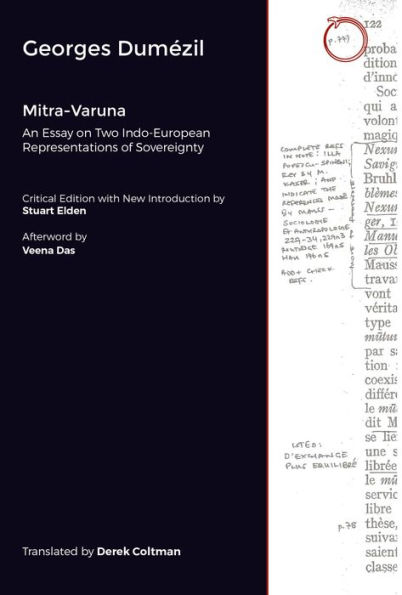
Mitra-Varuna: An Essay on Two Indo-European Representations of Sovereignty in Bloomington, MN
Current price: $25.00

Mitra-Varuna: An Essay on Two Indo-European Representations of Sovereignty in Bloomington, MN
Current price: $25.00
Loading Inventory...
Size: Paperback
A classic text that develops one prong of Dumézil’s tripartite hypothesis of Indo-European tribes: the sacred sovereign.
Georges Dumézil’s fascination with the myths and histories of India, Rome, Scandinavia, and the Celts yielded an idea that became his most influential scholarly legacy: the tripartite hypothesis, which divides Indo-European societal functions into three classes: the sacred sovereign, the warrior, and the producer.
Mitra-Varuna
, originally published in 1940, concentrates on the first function, that of sovereignty. Dumézil identifies two types of rulers, the first judicial and worldly, the second divine and supernatural. These figures, both priestly, are oppositional but complementary. The title nods to these roles, referring to the gods Mitra, a rational mediator, and Varuna, an awesome religious figure.
Stuart Elden’s critical edition, based on the 1988 English translation by Derek Coltman, identifies variations between the first and second French editions and completesand in places correctsDumézil’s references. The editor’s detailed introduction situates
within Dumézil’s career, outlines how his treatment of its themes developed over time, and relates the book to the political controversy around his ideas. Two new appendices contain passages that did not appear in the second French edition.
Georges Dumézil’s fascination with the myths and histories of India, Rome, Scandinavia, and the Celts yielded an idea that became his most influential scholarly legacy: the tripartite hypothesis, which divides Indo-European societal functions into three classes: the sacred sovereign, the warrior, and the producer.
Mitra-Varuna
, originally published in 1940, concentrates on the first function, that of sovereignty. Dumézil identifies two types of rulers, the first judicial and worldly, the second divine and supernatural. These figures, both priestly, are oppositional but complementary. The title nods to these roles, referring to the gods Mitra, a rational mediator, and Varuna, an awesome religious figure.
Stuart Elden’s critical edition, based on the 1988 English translation by Derek Coltman, identifies variations between the first and second French editions and completesand in places correctsDumézil’s references. The editor’s detailed introduction situates
within Dumézil’s career, outlines how his treatment of its themes developed over time, and relates the book to the political controversy around his ideas. Two new appendices contain passages that did not appear in the second French edition.
A classic text that develops one prong of Dumézil’s tripartite hypothesis of Indo-European tribes: the sacred sovereign.
Georges Dumézil’s fascination with the myths and histories of India, Rome, Scandinavia, and the Celts yielded an idea that became his most influential scholarly legacy: the tripartite hypothesis, which divides Indo-European societal functions into three classes: the sacred sovereign, the warrior, and the producer.
Mitra-Varuna
, originally published in 1940, concentrates on the first function, that of sovereignty. Dumézil identifies two types of rulers, the first judicial and worldly, the second divine and supernatural. These figures, both priestly, are oppositional but complementary. The title nods to these roles, referring to the gods Mitra, a rational mediator, and Varuna, an awesome religious figure.
Stuart Elden’s critical edition, based on the 1988 English translation by Derek Coltman, identifies variations between the first and second French editions and completesand in places correctsDumézil’s references. The editor’s detailed introduction situates
within Dumézil’s career, outlines how his treatment of its themes developed over time, and relates the book to the political controversy around his ideas. Two new appendices contain passages that did not appear in the second French edition.
Georges Dumézil’s fascination with the myths and histories of India, Rome, Scandinavia, and the Celts yielded an idea that became his most influential scholarly legacy: the tripartite hypothesis, which divides Indo-European societal functions into three classes: the sacred sovereign, the warrior, and the producer.
Mitra-Varuna
, originally published in 1940, concentrates on the first function, that of sovereignty. Dumézil identifies two types of rulers, the first judicial and worldly, the second divine and supernatural. These figures, both priestly, are oppositional but complementary. The title nods to these roles, referring to the gods Mitra, a rational mediator, and Varuna, an awesome religious figure.
Stuart Elden’s critical edition, based on the 1988 English translation by Derek Coltman, identifies variations between the first and second French editions and completesand in places correctsDumézil’s references. The editor’s detailed introduction situates
within Dumézil’s career, outlines how his treatment of its themes developed over time, and relates the book to the political controversy around his ideas. Two new appendices contain passages that did not appear in the second French edition.
Shop Similar Products









Find at Mall of America® in Bloomington, MN
Visit at Mall of America® in Bloomington, MN