


Home
Lucio Fontana: Sculpture
Barnes and Noble
Loading Inventory...
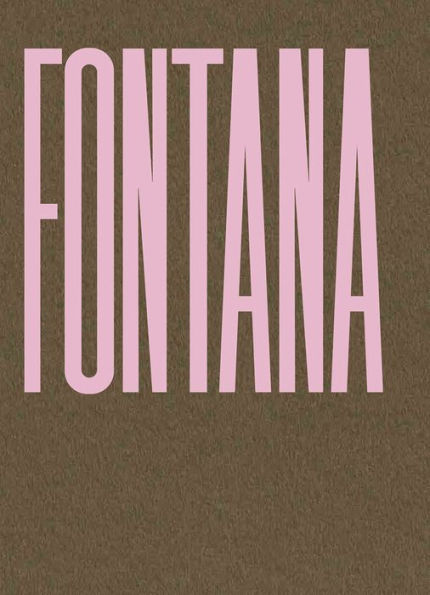
Lucio Fontana: Sculpture in Bloomington, MN
Current price: $65.00

Lucio Fontana: Sculpture in Bloomington, MN
Current price: $65.00
Loading Inventory...
Size: OS
On Fontana’s decades-long experiments in terracotta, plaster, concrete, metal and more
Hauser & Wirth’s new Lucio Fontana (1899–1968) publication charts the uncategorizable artist’s exploration of sculpture from the 1930s until his death. In a substantial essay, curator and leading Fontana scholar Luca Massimo Barbero explores ceramics as “the ideal material for the Fontanian gesture” and reexamines Fontana’s experimentation with terracotta, clay, plaster, concrete and metal. Researcher Cristina Beltrami resituates Fontana as a pioneering artist in the European postwar context, investigating his exchanges with other Italian and international practitioners.
The monograph, a collaboration with the Fondazione Lucio Fontana, also includes a biographical essay by the foundation’s Maria Villa, tracing the artist’s life through his ever-innovating sculptural practice, and serves as a companion volume to
Lucio Fontana: Walking the Space
.
Hauser & Wirth’s new Lucio Fontana (1899–1968) publication charts the uncategorizable artist’s exploration of sculpture from the 1930s until his death. In a substantial essay, curator and leading Fontana scholar Luca Massimo Barbero explores ceramics as “the ideal material for the Fontanian gesture” and reexamines Fontana’s experimentation with terracotta, clay, plaster, concrete and metal. Researcher Cristina Beltrami resituates Fontana as a pioneering artist in the European postwar context, investigating his exchanges with other Italian and international practitioners.
The monograph, a collaboration with the Fondazione Lucio Fontana, also includes a biographical essay by the foundation’s Maria Villa, tracing the artist’s life through his ever-innovating sculptural practice, and serves as a companion volume to
Lucio Fontana: Walking the Space
.
On Fontana’s decades-long experiments in terracotta, plaster, concrete, metal and more
Hauser & Wirth’s new Lucio Fontana (1899–1968) publication charts the uncategorizable artist’s exploration of sculpture from the 1930s until his death. In a substantial essay, curator and leading Fontana scholar Luca Massimo Barbero explores ceramics as “the ideal material for the Fontanian gesture” and reexamines Fontana’s experimentation with terracotta, clay, plaster, concrete and metal. Researcher Cristina Beltrami resituates Fontana as a pioneering artist in the European postwar context, investigating his exchanges with other Italian and international practitioners.
The monograph, a collaboration with the Fondazione Lucio Fontana, also includes a biographical essay by the foundation’s Maria Villa, tracing the artist’s life through his ever-innovating sculptural practice, and serves as a companion volume to
Lucio Fontana: Walking the Space
.
Hauser & Wirth’s new Lucio Fontana (1899–1968) publication charts the uncategorizable artist’s exploration of sculpture from the 1930s until his death. In a substantial essay, curator and leading Fontana scholar Luca Massimo Barbero explores ceramics as “the ideal material for the Fontanian gesture” and reexamines Fontana’s experimentation with terracotta, clay, plaster, concrete and metal. Researcher Cristina Beltrami resituates Fontana as a pioneering artist in the European postwar context, investigating his exchanges with other Italian and international practitioners.
The monograph, a collaboration with the Fondazione Lucio Fontana, also includes a biographical essay by the foundation’s Maria Villa, tracing the artist’s life through his ever-innovating sculptural practice, and serves as a companion volume to
Lucio Fontana: Walking the Space
.
Shop Similar Products












Find at Mall of America® in Bloomington, MN
Visit at Mall of America® in Bloomington, MN