


Home
Draupnir's Sweat and Mardöll's Tears: An Archaeology of Jewellery, Gender and Identity in Viking Age Iceland
Barnes and Noble
Loading Inventory...
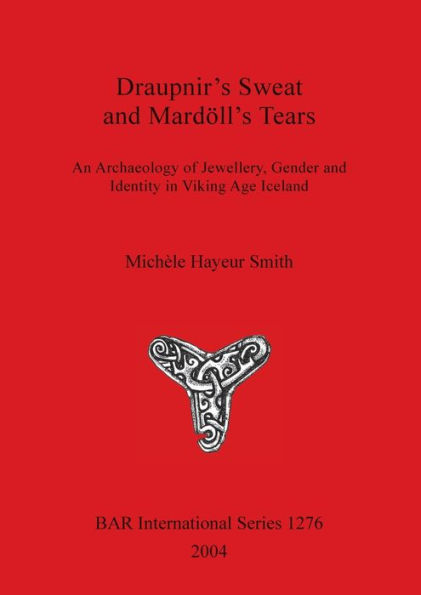
Draupnir's Sweat and Mardöll's Tears: An Archaeology of Jewellery, Gender and Identity in Viking Age Iceland in Bloomington, MN
Current price: $102.50

Draupnir's Sweat and Mardöll's Tears: An Archaeology of Jewellery, Gender and Identity in Viking Age Iceland in Bloomington, MN
Current price: $102.50
Loading Inventory...
Size: OS
Items of jewellery in Icelandic society traditionally have been analysed in typological, chronological and technological terms with descriptive approaches to discussing their presence in the archaeological record. Drawing on this research but taking a more anthropological approach, Michèle Hayeur Smith looks at jewellery as social symbols and a potential indicator of gender, status and power differences, and of spiritual and religious sentiment. Taking evidence largely from burial contexts dating to between AD 870 and 1000, the results of her study suggest that jewellery was used to differentiate between the sexes, and especially to draw attention to female sexual attributes, and most likely to denote differences in gender and cultural identity. The materials used to produce jewellery, craftsmanship, technology and production are also examined in the later chapters.
Items of jewellery in Icelandic society traditionally have been analysed in typological, chronological and technological terms with descriptive approaches to discussing their presence in the archaeological record. Drawing on this research but taking a more anthropological approach, Michèle Hayeur Smith looks at jewellery as social symbols and a potential indicator of gender, status and power differences, and of spiritual and religious sentiment. Taking evidence largely from burial contexts dating to between AD 870 and 1000, the results of her study suggest that jewellery was used to differentiate between the sexes, and especially to draw attention to female sexual attributes, and most likely to denote differences in gender and cultural identity. The materials used to produce jewellery, craftsmanship, technology and production are also examined in the later chapters.
Shop Similar Products









Find at Mall of America® in Bloomington, MN
Visit at Mall of America® in Bloomington, MN