


Home
Crisis In Mexico: Assessing The Mérida Initiative And Its Impact On Us-Mexican Security
Barnes and Noble
Loading Inventory...
Crisis In Mexico: Assessing The Mérida Initiative And Its Impact On Us-Mexican Security in Bloomington, MN
Current price: $14.95

Crisis In Mexico: Assessing The Mérida Initiative And Its Impact On Us-Mexican Security in Bloomington, MN
Current price: $14.95
Loading Inventory...
Size: OS
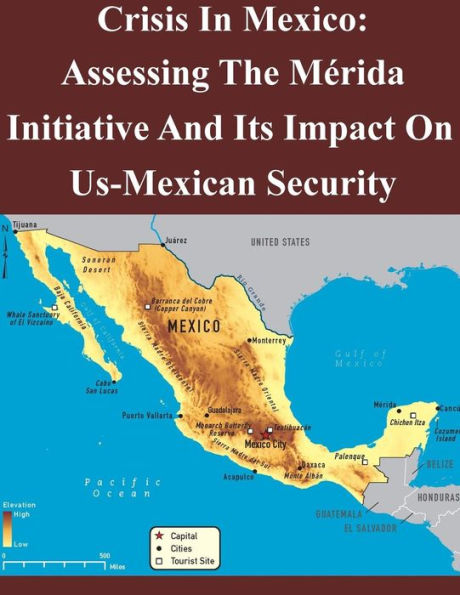
President George W. Bush signed the Mérida Initiative, referred to as Plan Mexico by critics, into law on June 30, 2008. The plan contains approximately $1.5 billion in aid to Mexico, Central America, and Caribbean countries to improve regional security by reducing organized crime, drug smuggling, and illegal arms trafficking while strengthening domestic institutions. Critics argue that the plan does not adequately address the demand side of the drug model, will add to the militarization of Mexico, empower corrupt institutions, and reduce the rule of law while failing to address the violence of organized crime.4 The researcher has identified organized crime, socio-economic disparity, and institutional corruption as the main factors that led Mexican President Calderón to ask for assistance from the United States. Although the Mérida Initiative is a comprehensive plan that attempts to solve a number of complex transnational issues that affect both the United States and Mexico, its performance to date, indicates that it is not meeting its objectives. Using problem-solution methodology, the researcher identified additional measures, such as demand-side drug reduction programs, US gun control enforcement, immigration reform, and economic reforms that would improve the chances of achieving long-term stability and security in the region. The success of the Mérida Initiative will require a holistic and synergistic approach between a joint, interagency, and coalition team.
President George W. Bush signed the Mérida Initiative, referred to as Plan Mexico by critics, into law on June 30, 2008. The plan contains approximately $1.5 billion in aid to Mexico, Central America, and Caribbean countries to improve regional security by reducing organized crime, drug smuggling, and illegal arms trafficking while strengthening domestic institutions. Critics argue that the plan does not adequately address the demand side of the drug model, will add to the militarization of Mexico, empower corrupt institutions, and reduce the rule of law while failing to address the violence of organized crime.4 The researcher has identified organized crime, socio-economic disparity, and institutional corruption as the main factors that led Mexican President Calderón to ask for assistance from the United States. Although the Mérida Initiative is a comprehensive plan that attempts to solve a number of complex transnational issues that affect both the United States and Mexico, its performance to date, indicates that it is not meeting its objectives. Using problem-solution methodology, the researcher identified additional measures, such as demand-side drug reduction programs, US gun control enforcement, immigration reform, and economic reforms that would improve the chances of achieving long-term stability and security in the region. The success of the Mérida Initiative will require a holistic and synergistic approach between a joint, interagency, and coalition team.
Shop Similar Products















Find at Mall of America® in Bloomington, MN
Visit at Mall of America® in Bloomington, MN