


Home
Corruption, Anti-Corruption, Vigilance, and State Building from Early to Late Modern Times
Barnes and Noble
Loading Inventory...
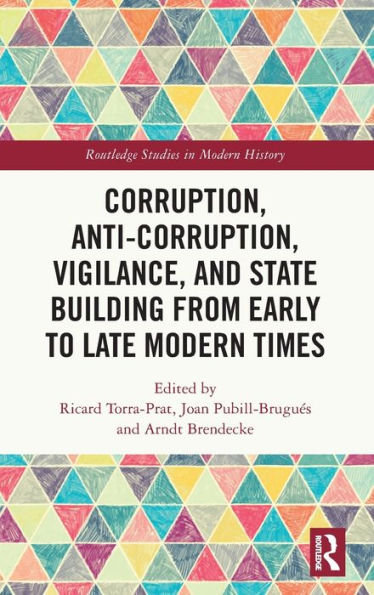
Corruption, Anti-Corruption, Vigilance, and State Building from Early to Late Modern Times in Bloomington, MN
Current price: $190.00

Corruption, Anti-Corruption, Vigilance, and State Building from Early to Late Modern Times in Bloomington, MN
Current price: $190.00
Loading Inventory...
Size: Hardcover
Corruption, Anti-Corruption, Vigilance, and State Building from Early to Late Modern Times
challenges current historiographical approaches, proposing new interpretations to rethink the relation between corruption and the socio-political and economic transformations since early globalisation.
By adopting both transnational and long-term approaches, the book explores the historical dimension of notions such as accountability, transparency, and vigilance in their immediate political, social, and legal contexts. The starting point is to view corruption not as a moral category that emerged in 1789 to delegitimise past, foreign or present state systems, but as a constantly contested concept that must also be historicised in past societies. The collection revisits chronologies and examines different local, regional, and national frames, highlighting that the path to modernity was contested and affected by a variety of unique circumstances, such as revolutions and external political powers.
Building on the latest research and offering new methods of inquiry, this book is a compelling resource for academics interested in political history and the history of corruption.
challenges current historiographical approaches, proposing new interpretations to rethink the relation between corruption and the socio-political and economic transformations since early globalisation.
By adopting both transnational and long-term approaches, the book explores the historical dimension of notions such as accountability, transparency, and vigilance in their immediate political, social, and legal contexts. The starting point is to view corruption not as a moral category that emerged in 1789 to delegitimise past, foreign or present state systems, but as a constantly contested concept that must also be historicised in past societies. The collection revisits chronologies and examines different local, regional, and national frames, highlighting that the path to modernity was contested and affected by a variety of unique circumstances, such as revolutions and external political powers.
Building on the latest research and offering new methods of inquiry, this book is a compelling resource for academics interested in political history and the history of corruption.
Corruption, Anti-Corruption, Vigilance, and State Building from Early to Late Modern Times
challenges current historiographical approaches, proposing new interpretations to rethink the relation between corruption and the socio-political and economic transformations since early globalisation.
By adopting both transnational and long-term approaches, the book explores the historical dimension of notions such as accountability, transparency, and vigilance in their immediate political, social, and legal contexts. The starting point is to view corruption not as a moral category that emerged in 1789 to delegitimise past, foreign or present state systems, but as a constantly contested concept that must also be historicised in past societies. The collection revisits chronologies and examines different local, regional, and national frames, highlighting that the path to modernity was contested and affected by a variety of unique circumstances, such as revolutions and external political powers.
Building on the latest research and offering new methods of inquiry, this book is a compelling resource for academics interested in political history and the history of corruption.
challenges current historiographical approaches, proposing new interpretations to rethink the relation between corruption and the socio-political and economic transformations since early globalisation.
By adopting both transnational and long-term approaches, the book explores the historical dimension of notions such as accountability, transparency, and vigilance in their immediate political, social, and legal contexts. The starting point is to view corruption not as a moral category that emerged in 1789 to delegitimise past, foreign or present state systems, but as a constantly contested concept that must also be historicised in past societies. The collection revisits chronologies and examines different local, regional, and national frames, highlighting that the path to modernity was contested and affected by a variety of unique circumstances, such as revolutions and external political powers.
Building on the latest research and offering new methods of inquiry, this book is a compelling resource for academics interested in political history and the history of corruption.
Shop Similar Products











Find at Mall of America® in Bloomington, MN
Visit at Mall of America® in Bloomington, MN