


Home
Combating Transnational Terrorism in Kenya and Whether the Kenyan Government Effort to Fight Terrorism is Effective in Reducing the Transnational Terrorism Threat in the Country
Barnes and Noble
Loading Inventory...
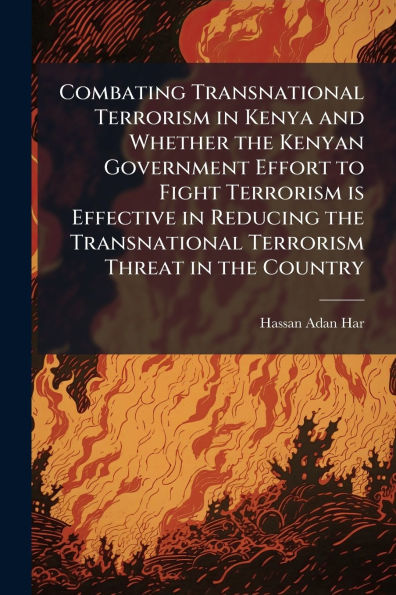
Combating Transnational Terrorism in Kenya and Whether the Kenyan Government Effort to Fight Terrorism is Effective in Reducing the Transnational Terrorism Threat in the Country in Bloomington, MN
Current price: $15.95

Combating Transnational Terrorism in Kenya and Whether the Kenyan Government Effort to Fight Terrorism is Effective in Reducing the Transnational Terrorism Threat in the Country in Bloomington, MN
Current price: $15.95
Loading Inventory...
Size: OS
This thesis examines the Kenyan government's (GoK's) increasingly responsive strategy, and its implementation, in combating transnational terrorism focusing on the case studies of the 1998 US Embassy bombing and the 2002 terrorist attacks in Mombasa, Kenya. The analytical research methodology used is the qualitative case study method. It identifies the factors regarding why terrorists targeted Kenya, how Kenya reacted, and the perceived improvements in Kenya's response to these attacks. Deeper analysis is done by means of analyzing Kenya's use of traditional and nontraditional instruments of power in its war on terrorism. They are identified and assessed, based on the two case studies, through the submission of questionnaires to an independent panel of experts knowledgeable on Kenya's fight against transnational terrorism. The analysis of the response indicates that the Kenyan government was moderately effective in employing the instruments of power between 1998 and 2001. After the 2002 terrorist attacks, it effectively applied the instruments of power to mitigate the threat and developed a comprehensive national strategy against transnational terrorism. The conclusion of this study is that while the Kenyan government's counterterrorism strategy is becoming increasingly more effective in combating transnational terrorism in terms of the strategy's ends and ways, it falls short of applying the appropriate means in reducing the underlying conditions that make Kenya an easy target for terrorist acts. Recommendations, both short-term and long-term, are proposed to assist the GoK in conducting an even more effective counterterrorism strategy.
This work has been selected by scholars as being culturally important, and is part of the knowledge base of civilization as we know it. This work was reproduced from the original artifact, and remains as true to the original work as possible. Therefore, you will see the original copyright references, library stamps (as most of these works have been housed in our most important libraries around the world), and other notations in the work.
This work is in the public domain in the United States of America, and possibly other nations. Within the United States, you may freely copy and distribute this work, as no entity (individual or corporate) has a copyright on the body of the work.
As a reproduction of a historical artifact, this work may contain missing or blurred pages, poor pictures, errant marks, etc. Scholars believe, and we concur, that this work is important enough to be preserved, reproduced, and made generally available to the public. We appreciate your support of the preservation process, and thank you for being an important part of keeping this knowledge alive and relevant.
This work has been selected by scholars as being culturally important, and is part of the knowledge base of civilization as we know it. This work was reproduced from the original artifact, and remains as true to the original work as possible. Therefore, you will see the original copyright references, library stamps (as most of these works have been housed in our most important libraries around the world), and other notations in the work.
This work is in the public domain in the United States of America, and possibly other nations. Within the United States, you may freely copy and distribute this work, as no entity (individual or corporate) has a copyright on the body of the work.
As a reproduction of a historical artifact, this work may contain missing or blurred pages, poor pictures, errant marks, etc. Scholars believe, and we concur, that this work is important enough to be preserved, reproduced, and made generally available to the public. We appreciate your support of the preservation process, and thank you for being an important part of keeping this knowledge alive and relevant.
This thesis examines the Kenyan government's (GoK's) increasingly responsive strategy, and its implementation, in combating transnational terrorism focusing on the case studies of the 1998 US Embassy bombing and the 2002 terrorist attacks in Mombasa, Kenya. The analytical research methodology used is the qualitative case study method. It identifies the factors regarding why terrorists targeted Kenya, how Kenya reacted, and the perceived improvements in Kenya's response to these attacks. Deeper analysis is done by means of analyzing Kenya's use of traditional and nontraditional instruments of power in its war on terrorism. They are identified and assessed, based on the two case studies, through the submission of questionnaires to an independent panel of experts knowledgeable on Kenya's fight against transnational terrorism. The analysis of the response indicates that the Kenyan government was moderately effective in employing the instruments of power between 1998 and 2001. After the 2002 terrorist attacks, it effectively applied the instruments of power to mitigate the threat and developed a comprehensive national strategy against transnational terrorism. The conclusion of this study is that while the Kenyan government's counterterrorism strategy is becoming increasingly more effective in combating transnational terrorism in terms of the strategy's ends and ways, it falls short of applying the appropriate means in reducing the underlying conditions that make Kenya an easy target for terrorist acts. Recommendations, both short-term and long-term, are proposed to assist the GoK in conducting an even more effective counterterrorism strategy.
This work has been selected by scholars as being culturally important, and is part of the knowledge base of civilization as we know it. This work was reproduced from the original artifact, and remains as true to the original work as possible. Therefore, you will see the original copyright references, library stamps (as most of these works have been housed in our most important libraries around the world), and other notations in the work.
This work is in the public domain in the United States of America, and possibly other nations. Within the United States, you may freely copy and distribute this work, as no entity (individual or corporate) has a copyright on the body of the work.
As a reproduction of a historical artifact, this work may contain missing or blurred pages, poor pictures, errant marks, etc. Scholars believe, and we concur, that this work is important enough to be preserved, reproduced, and made generally available to the public. We appreciate your support of the preservation process, and thank you for being an important part of keeping this knowledge alive and relevant.
This work has been selected by scholars as being culturally important, and is part of the knowledge base of civilization as we know it. This work was reproduced from the original artifact, and remains as true to the original work as possible. Therefore, you will see the original copyright references, library stamps (as most of these works have been housed in our most important libraries around the world), and other notations in the work.
This work is in the public domain in the United States of America, and possibly other nations. Within the United States, you may freely copy and distribute this work, as no entity (individual or corporate) has a copyright on the body of the work.
As a reproduction of a historical artifact, this work may contain missing or blurred pages, poor pictures, errant marks, etc. Scholars believe, and we concur, that this work is important enough to be preserved, reproduced, and made generally available to the public. We appreciate your support of the preservation process, and thank you for being an important part of keeping this knowledge alive and relevant.
Shop Similar Products














Find at Mall of America® in Bloomington, MN
Visit at Mall of America® in Bloomington, MN