


Home
Brahms Patriotic and Political
Barnes and Noble
Loading Inventory...
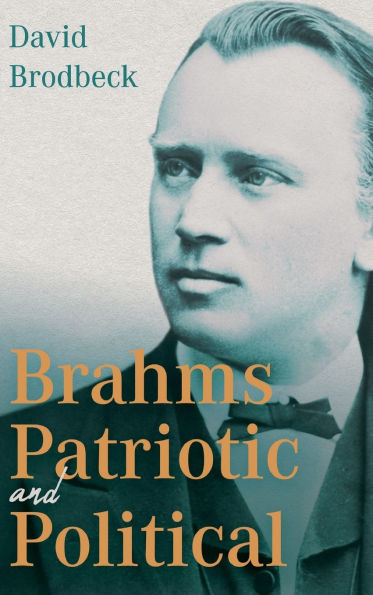
Brahms Patriotic and Political in Bloomington, MN
Current price: $120.00

Brahms Patriotic and Political in Bloomington, MN
Current price: $120.00
Loading Inventory...
Size: OS
Offers a historical context in which to understand how Brahms's three most intensely political and nationalistic works interact with questions of German patriotism, liberalism and nationalism.
Johannes Brahms rarely composed music that engaged the national-political issues of the day. Three of his works, though, do precisely this: the
Fünf Lieder für Männerchor
; the
Triumphlied
for eight-part chorus and orchestra; and the
Fest- und Gedenksprüche
for eight-part chorus a cappella. In
Brahms Patriotic and Political,
David Brodbeck challenges notions that Brahms's political music evinces embarrassing anticipations of later Prussian militarism and German chauvinism. Instead, he provides a thick historical context in which to read these works and offers a more nuanced understanding of the intersections of Brahms's music and questions of German patriotism, liberalism, and nationalism than has been customary in the field of historical musicology.
In particular, Brodbeck relates the
Männerchor-Lieder
to the debate over how and in what form a German nation-state might be achieved; he relates the
to the euphoria but also the solemnity that attended the foundation of the German Reich; and he relates the
to the necessary work of instilling in the diverse German people a genuine sense of national belonging. At the same time, he traces Brahms's changing attitude toward Otto von Bismarck, the "Blacksmith of the Reich," whom he originally loathed but, in time, came to venerate.
Brahms Patriotic and Political
will appeal to readers with interests in both nineteenth-century German music and Central European history.
Johannes Brahms rarely composed music that engaged the national-political issues of the day. Three of his works, though, do precisely this: the
Fünf Lieder für Männerchor
; the
Triumphlied
for eight-part chorus and orchestra; and the
Fest- und Gedenksprüche
for eight-part chorus a cappella. In
Brahms Patriotic and Political,
David Brodbeck challenges notions that Brahms's political music evinces embarrassing anticipations of later Prussian militarism and German chauvinism. Instead, he provides a thick historical context in which to read these works and offers a more nuanced understanding of the intersections of Brahms's music and questions of German patriotism, liberalism, and nationalism than has been customary in the field of historical musicology.
In particular, Brodbeck relates the
Männerchor-Lieder
to the debate over how and in what form a German nation-state might be achieved; he relates the
to the euphoria but also the solemnity that attended the foundation of the German Reich; and he relates the
to the necessary work of instilling in the diverse German people a genuine sense of national belonging. At the same time, he traces Brahms's changing attitude toward Otto von Bismarck, the "Blacksmith of the Reich," whom he originally loathed but, in time, came to venerate.
Brahms Patriotic and Political
will appeal to readers with interests in both nineteenth-century German music and Central European history.
Offers a historical context in which to understand how Brahms's three most intensely political and nationalistic works interact with questions of German patriotism, liberalism and nationalism.
Johannes Brahms rarely composed music that engaged the national-political issues of the day. Three of his works, though, do precisely this: the
Fünf Lieder für Männerchor
; the
Triumphlied
for eight-part chorus and orchestra; and the
Fest- und Gedenksprüche
for eight-part chorus a cappella. In
Brahms Patriotic and Political,
David Brodbeck challenges notions that Brahms's political music evinces embarrassing anticipations of later Prussian militarism and German chauvinism. Instead, he provides a thick historical context in which to read these works and offers a more nuanced understanding of the intersections of Brahms's music and questions of German patriotism, liberalism, and nationalism than has been customary in the field of historical musicology.
In particular, Brodbeck relates the
Männerchor-Lieder
to the debate over how and in what form a German nation-state might be achieved; he relates the
to the euphoria but also the solemnity that attended the foundation of the German Reich; and he relates the
to the necessary work of instilling in the diverse German people a genuine sense of national belonging. At the same time, he traces Brahms's changing attitude toward Otto von Bismarck, the "Blacksmith of the Reich," whom he originally loathed but, in time, came to venerate.
Brahms Patriotic and Political
will appeal to readers with interests in both nineteenth-century German music and Central European history.
Johannes Brahms rarely composed music that engaged the national-political issues of the day. Three of his works, though, do precisely this: the
Fünf Lieder für Männerchor
; the
Triumphlied
for eight-part chorus and orchestra; and the
Fest- und Gedenksprüche
for eight-part chorus a cappella. In
Brahms Patriotic and Political,
David Brodbeck challenges notions that Brahms's political music evinces embarrassing anticipations of later Prussian militarism and German chauvinism. Instead, he provides a thick historical context in which to read these works and offers a more nuanced understanding of the intersections of Brahms's music and questions of German patriotism, liberalism, and nationalism than has been customary in the field of historical musicology.
In particular, Brodbeck relates the
Männerchor-Lieder
to the debate over how and in what form a German nation-state might be achieved; he relates the
to the euphoria but also the solemnity that attended the foundation of the German Reich; and he relates the
to the necessary work of instilling in the diverse German people a genuine sense of national belonging. At the same time, he traces Brahms's changing attitude toward Otto von Bismarck, the "Blacksmith of the Reich," whom he originally loathed but, in time, came to venerate.
Brahms Patriotic and Political
will appeal to readers with interests in both nineteenth-century German music and Central European history.









Find at Mall of America® in Bloomington, MN
Visit at Mall of America® in Bloomington, MN