


Home
Artificial Neural Networks for Knowledge Extraction in Spatiotemporal Dynamics and Weather Forecasting
Barnes and Noble
Loading Inventory...
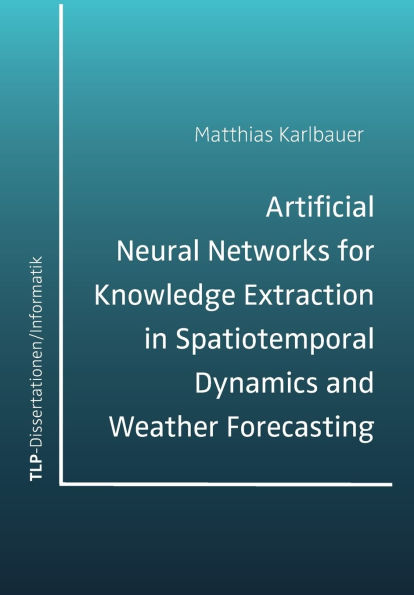
Artificial Neural Networks for Knowledge Extraction in Spatiotemporal Dynamics and Weather Forecasting in Bloomington, MN
Current price: $22.50

Artificial Neural Networks for Knowledge Extraction in Spatiotemporal Dynamics and Weather Forecasting in Bloomington, MN
Current price: $22.50
Loading Inventory...
Size: OS
This thesis explores the potential of machine learning methods for improving weather forecasts. Since weather is considered a spatiotemporal process that evolves over space through time, the thesis first investigates the design choices required for machine learning models to simulate synthetic spatiotemporal processes, such as the two-dimensional wave equation. It then develops a method for analyzing machine learning models that enables the extraction of unknown process-relevant context that parameterizes an observed simulated spatiotemporal process of interest. Relating these extracted factors to physical properties leads the thesis to physics-aware machine learning, where it explores how to fuse process knowledge from physics with the learning ability of artificial neural networks. Given the insights from those investigations, a competitive deep learning weather prediction model is designed to understand which design choices support data-driven algorithms to learn a meaningful function that predicts realistic and stable states of the atmosphere over hundreds of hours, days, and weeks into the future.
This thesis explores the potential of machine learning methods for improving weather forecasts. Since weather is considered a spatiotemporal process that evolves over space through time, the thesis first investigates the design choices required for machine learning models to simulate synthetic spatiotemporal processes, such as the two-dimensional wave equation. It then develops a method for analyzing machine learning models that enables the extraction of unknown process-relevant context that parameterizes an observed simulated spatiotemporal process of interest. Relating these extracted factors to physical properties leads the thesis to physics-aware machine learning, where it explores how to fuse process knowledge from physics with the learning ability of artificial neural networks. Given the insights from those investigations, a competitive deep learning weather prediction model is designed to understand which design choices support data-driven algorithms to learn a meaningful function that predicts realistic and stable states of the atmosphere over hundreds of hours, days, and weeks into the future.
Shop Similar Products










Find at Mall of America® in Bloomington, MN
Visit at Mall of America® in Bloomington, MN