


Home
Uneven Innovation: The Work of Smart Cities
Barnes and Noble
Loading Inventory...
Uneven Innovation: The Work of Smart Cities in Bloomington, MN
Current price: $90.00

Uneven Innovation: The Work of Smart Cities in Bloomington, MN
Current price: $90.00
Loading Inventory...
Size: Hardcover
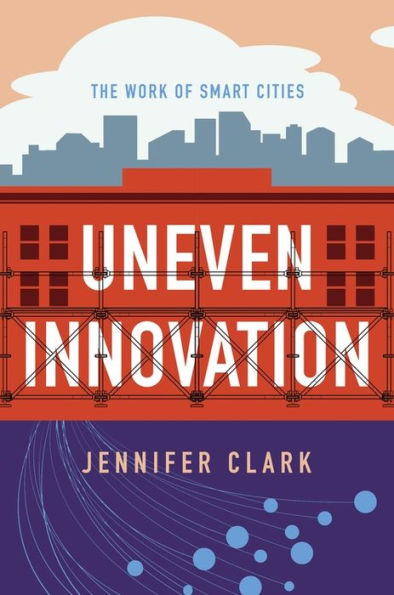
The city of the future, we are told, is the smart city. By seamlessly integrating information and communication technologies into the provision and management of public services, such cities will enhance opportunity and bolster civic engagement. Smarter cities will bring in new revenue while saving money. They will be more of everything that a twenty-first century urban planner, citizen, and elected official wants: more efficient, more sustainable, and more inclusive. Is this true?
In
Uneven Innovation
, Jennifer Clark considers the potential of these emerging technologies as well as their capacity to exacerbate existing inequalities and even produce new ones. She reframes the smart city concept within the trajectory of uneven development of cities and regions, as well as the long history of technocratic solutions to urban policy challenges. Clark argues that urban change driven by the technology sector is following the patterns that have previously led to imbalanced access, opportunities, and outcomes. The tech sector needs the city, yet it exploits and maintains unequal arrangements, embedding labor flexibility and precarity in the built environment. Technology development,
contends, is the easy part; understanding the city and its governance, regulation, access, participation, and representation—all of which are complex and highly localized—is the real challenge. Clark’s critique leads to policy prescriptions that present a path toward an alternative future in which smart cities result in more equitable communities.
In
Uneven Innovation
, Jennifer Clark considers the potential of these emerging technologies as well as their capacity to exacerbate existing inequalities and even produce new ones. She reframes the smart city concept within the trajectory of uneven development of cities and regions, as well as the long history of technocratic solutions to urban policy challenges. Clark argues that urban change driven by the technology sector is following the patterns that have previously led to imbalanced access, opportunities, and outcomes. The tech sector needs the city, yet it exploits and maintains unequal arrangements, embedding labor flexibility and precarity in the built environment. Technology development,
contends, is the easy part; understanding the city and its governance, regulation, access, participation, and representation—all of which are complex and highly localized—is the real challenge. Clark’s critique leads to policy prescriptions that present a path toward an alternative future in which smart cities result in more equitable communities.
The city of the future, we are told, is the smart city. By seamlessly integrating information and communication technologies into the provision and management of public services, such cities will enhance opportunity and bolster civic engagement. Smarter cities will bring in new revenue while saving money. They will be more of everything that a twenty-first century urban planner, citizen, and elected official wants: more efficient, more sustainable, and more inclusive. Is this true?
In
Uneven Innovation
, Jennifer Clark considers the potential of these emerging technologies as well as their capacity to exacerbate existing inequalities and even produce new ones. She reframes the smart city concept within the trajectory of uneven development of cities and regions, as well as the long history of technocratic solutions to urban policy challenges. Clark argues that urban change driven by the technology sector is following the patterns that have previously led to imbalanced access, opportunities, and outcomes. The tech sector needs the city, yet it exploits and maintains unequal arrangements, embedding labor flexibility and precarity in the built environment. Technology development,
contends, is the easy part; understanding the city and its governance, regulation, access, participation, and representation—all of which are complex and highly localized—is the real challenge. Clark’s critique leads to policy prescriptions that present a path toward an alternative future in which smart cities result in more equitable communities.
In
Uneven Innovation
, Jennifer Clark considers the potential of these emerging technologies as well as their capacity to exacerbate existing inequalities and even produce new ones. She reframes the smart city concept within the trajectory of uneven development of cities and regions, as well as the long history of technocratic solutions to urban policy challenges. Clark argues that urban change driven by the technology sector is following the patterns that have previously led to imbalanced access, opportunities, and outcomes. The tech sector needs the city, yet it exploits and maintains unequal arrangements, embedding labor flexibility and precarity in the built environment. Technology development,
contends, is the easy part; understanding the city and its governance, regulation, access, participation, and representation—all of which are complex and highly localized—is the real challenge. Clark’s critique leads to policy prescriptions that present a path toward an alternative future in which smart cities result in more equitable communities.
Shop Similar Products










Find at Mall of America® in Bloomington, MN
Visit at Mall of America® in Bloomington, MN