


Home
Theorie der musischen Künste der Hellenen 3 Volume Set in 4 parts
Barnes and Noble
Loading Inventory...
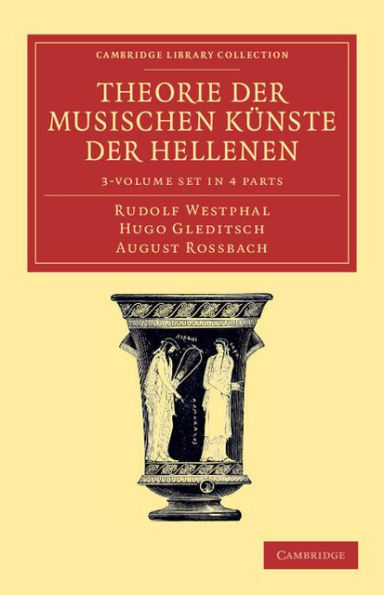
Theorie der musischen Künste der Hellenen 3 Volume Set in 4 parts in Bloomington, MN
Current price: $214.00

Theorie der musischen Künste der Hellenen 3 Volume Set in 4 parts in Bloomington, MN
Current price: $214.00
Loading Inventory...
Size: OS
Rudolf Westphal (1826─92) originally studied theology at the University of Marburg before turning to classical philology and comparative linguistics. He learnt Sanskrit and Arabic and took a keen interest in Indo-European languages and Semitic grammar. In the late 1850s and early 1860s he joined his friend and fellow philologist August Rossbach (1823–98) at the University of Breslau (Wrocław). This multi-volume work on ancient Greek metre and music resulted from their collaboration. Reissued here is the revised third edition published in four parts between 1885 and 1889. Volume 1 (1885) is devoted to rhythm while Volume 2 (1886) looks at melody and harmony. Part 1 of Volume 3 (1887) explores prosody and the distinction drawn by the philosopher Aristoxenus between singing and speaking, while Part 2 (1889) considers the historical development of different metres and analyses a number of lyrical and choral compositions in great detail.
Rudolf Westphal (1826─92) originally studied theology at the University of Marburg before turning to classical philology and comparative linguistics. He learnt Sanskrit and Arabic and took a keen interest in Indo-European languages and Semitic grammar. In the late 1850s and early 1860s he joined his friend and fellow philologist August Rossbach (1823–98) at the University of Breslau (Wrocław). This multi-volume work on ancient Greek metre and music resulted from their collaboration. Reissued here is the revised third edition published in four parts between 1885 and 1889. Volume 1 (1885) is devoted to rhythm while Volume 2 (1886) looks at melody and harmony. Part 1 of Volume 3 (1887) explores prosody and the distinction drawn by the philosopher Aristoxenus between singing and speaking, while Part 2 (1889) considers the historical development of different metres and analyses a number of lyrical and choral compositions in great detail.
Shop Similar Products













Find at Mall of America® in Bloomington, MN
Visit at Mall of America® in Bloomington, MN