


Home
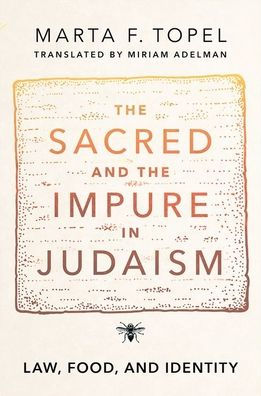
the Sacred and Impure Judaism: Law, Food, Identity
Barnes and Noble
Loading Inventory...
the Sacred and Impure Judaism: Law, Food, Identity in Bloomington, MN
Current price: $29.95

the Sacred and Impure Judaism: Law, Food, Identity in Bloomington, MN
Current price: $29.95
Loading Inventory...
Size: Paperback
The Sacred and the Impure in Judaism
examines the radicalization of certain Orthodox Jewish groups through the lens of
kashrut
, or Jewish dietary laws. Mata F. Topel begins with a historical look at
chumratization
the tendency among rabbis toward more rigorous interpretations of Jewish lawbeginning in Hungary in the late 19th century and on through the nascent radicalization of Israeli Orthodox Jews in the 1950s.
Then, drawing on Orthodox
manuals and interviews with
supervisors, ritual butchers, and a diverse group of Orthodox men and women, Topel shows how changes to dietary laws have had a profound effect on the ritual density of everyday life in these communities. Detailed descriptions of the difficulties that Orthodox housewives have in carrying out preparations for the Jewish Passover reveal a certain obsession with following the commandments and customs mandated by authorities. Contrasting medieval practices with current ones, Topel shows that the number of rules for celebrating Passover has increased exponentially in recent decades, an important indication of the
process that effects significant segments of this population. However, she also finds exceptions: While many Orthodox rabbis demand that
supervisors and housewives take great pains to avoid ingesting insects that may be found in vegetables and fruit, they have also become significantly more lenient when it comes to consuming non-kosher meatso much so that most meat consumed by Orthodox communities today is not kosher.
reveals considerable changes in the content and function of
for Orthodox Jews in Israel and its diaspora, which contradicts ideas of purity within this community and the notion that their beliefs and practices are identical to European Judaism of the 18th and 19th centuries, while highlighting the multiple and intricate relationships that exist between a community's religion, food, and identity.
examines the radicalization of certain Orthodox Jewish groups through the lens of
kashrut
, or Jewish dietary laws. Mata F. Topel begins with a historical look at
chumratization
the tendency among rabbis toward more rigorous interpretations of Jewish lawbeginning in Hungary in the late 19th century and on through the nascent radicalization of Israeli Orthodox Jews in the 1950s.
Then, drawing on Orthodox
manuals and interviews with
supervisors, ritual butchers, and a diverse group of Orthodox men and women, Topel shows how changes to dietary laws have had a profound effect on the ritual density of everyday life in these communities. Detailed descriptions of the difficulties that Orthodox housewives have in carrying out preparations for the Jewish Passover reveal a certain obsession with following the commandments and customs mandated by authorities. Contrasting medieval practices with current ones, Topel shows that the number of rules for celebrating Passover has increased exponentially in recent decades, an important indication of the
process that effects significant segments of this population. However, she also finds exceptions: While many Orthodox rabbis demand that
supervisors and housewives take great pains to avoid ingesting insects that may be found in vegetables and fruit, they have also become significantly more lenient when it comes to consuming non-kosher meatso much so that most meat consumed by Orthodox communities today is not kosher.
reveals considerable changes in the content and function of
for Orthodox Jews in Israel and its diaspora, which contradicts ideas of purity within this community and the notion that their beliefs and practices are identical to European Judaism of the 18th and 19th centuries, while highlighting the multiple and intricate relationships that exist between a community's religion, food, and identity.
The Sacred and the Impure in Judaism
examines the radicalization of certain Orthodox Jewish groups through the lens of
kashrut
, or Jewish dietary laws. Mata F. Topel begins with a historical look at
chumratization
the tendency among rabbis toward more rigorous interpretations of Jewish lawbeginning in Hungary in the late 19th century and on through the nascent radicalization of Israeli Orthodox Jews in the 1950s.
Then, drawing on Orthodox
manuals and interviews with
supervisors, ritual butchers, and a diverse group of Orthodox men and women, Topel shows how changes to dietary laws have had a profound effect on the ritual density of everyday life in these communities. Detailed descriptions of the difficulties that Orthodox housewives have in carrying out preparations for the Jewish Passover reveal a certain obsession with following the commandments and customs mandated by authorities. Contrasting medieval practices with current ones, Topel shows that the number of rules for celebrating Passover has increased exponentially in recent decades, an important indication of the
process that effects significant segments of this population. However, she also finds exceptions: While many Orthodox rabbis demand that
supervisors and housewives take great pains to avoid ingesting insects that may be found in vegetables and fruit, they have also become significantly more lenient when it comes to consuming non-kosher meatso much so that most meat consumed by Orthodox communities today is not kosher.
reveals considerable changes in the content and function of
for Orthodox Jews in Israel and its diaspora, which contradicts ideas of purity within this community and the notion that their beliefs and practices are identical to European Judaism of the 18th and 19th centuries, while highlighting the multiple and intricate relationships that exist between a community's religion, food, and identity.
examines the radicalization of certain Orthodox Jewish groups through the lens of
kashrut
, or Jewish dietary laws. Mata F. Topel begins with a historical look at
chumratization
the tendency among rabbis toward more rigorous interpretations of Jewish lawbeginning in Hungary in the late 19th century and on through the nascent radicalization of Israeli Orthodox Jews in the 1950s.
Then, drawing on Orthodox
manuals and interviews with
supervisors, ritual butchers, and a diverse group of Orthodox men and women, Topel shows how changes to dietary laws have had a profound effect on the ritual density of everyday life in these communities. Detailed descriptions of the difficulties that Orthodox housewives have in carrying out preparations for the Jewish Passover reveal a certain obsession with following the commandments and customs mandated by authorities. Contrasting medieval practices with current ones, Topel shows that the number of rules for celebrating Passover has increased exponentially in recent decades, an important indication of the
process that effects significant segments of this population. However, she also finds exceptions: While many Orthodox rabbis demand that
supervisors and housewives take great pains to avoid ingesting insects that may be found in vegetables and fruit, they have also become significantly more lenient when it comes to consuming non-kosher meatso much so that most meat consumed by Orthodox communities today is not kosher.
reveals considerable changes in the content and function of
for Orthodox Jews in Israel and its diaspora, which contradicts ideas of purity within this community and the notion that their beliefs and practices are identical to European Judaism of the 18th and 19th centuries, while highlighting the multiple and intricate relationships that exist between a community's religion, food, and identity.










Find at Mall of America® in Bloomington, MN
Visit at Mall of America® in Bloomington, MN