


Home
The Prunus mume Genome
Barnes and Noble
Loading Inventory...
The Prunus mume Genome in Bloomington, MN
Current price: $109.99

The Prunus mume Genome in Bloomington, MN
Current price: $109.99
Loading Inventory...
Size: Hardcover
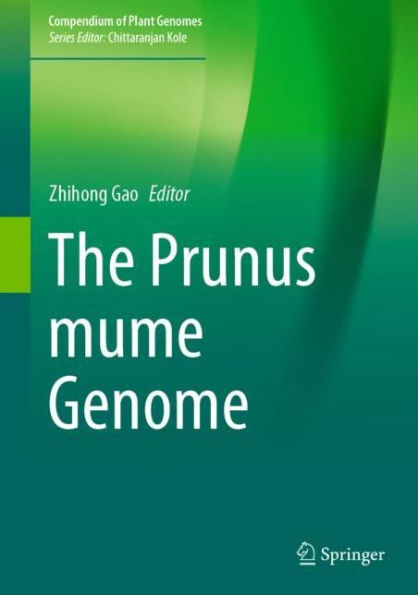
This book reviews the current status of
P. mume
research, highlighting how the new data coming from the release of the
genomes can advance science and help to solve a number of problems facing the
industry.
Prunus mume
, which was domesticated in China more than 3,000 years ago as an ornamental plant and for its fruit, is one of the first genomes among the
Prunus
subfamilies of the Rosaceae family that has been sequenced.
Combining the
genome with available data, scientists have succeeded in reconstructing nine ancestral chromosomes of the Rosaceae family, as well as the chromosome fusion, fission and duplication history of three major subfamilies. The
genome sequence adds to our understanding of Rosaceae evolution and provides an important basis for the improvement of fruit trees.
This book offers an essential a guide for all those who are interested in gene discovery, comparative genomics, molecular breeding and new breeding techniques; and will be particularly useful for scientists, breeders, university students, and public sector institutes that are involved in the
industry and/or Rosaceae research.
P. mume
research, highlighting how the new data coming from the release of the
genomes can advance science and help to solve a number of problems facing the
industry.
Prunus mume
, which was domesticated in China more than 3,000 years ago as an ornamental plant and for its fruit, is one of the first genomes among the
Prunus
subfamilies of the Rosaceae family that has been sequenced.
Combining the
genome with available data, scientists have succeeded in reconstructing nine ancestral chromosomes of the Rosaceae family, as well as the chromosome fusion, fission and duplication history of three major subfamilies. The
genome sequence adds to our understanding of Rosaceae evolution and provides an important basis for the improvement of fruit trees.
This book offers an essential a guide for all those who are interested in gene discovery, comparative genomics, molecular breeding and new breeding techniques; and will be particularly useful for scientists, breeders, university students, and public sector institutes that are involved in the
industry and/or Rosaceae research.
This book reviews the current status of
P. mume
research, highlighting how the new data coming from the release of the
genomes can advance science and help to solve a number of problems facing the
industry.
Prunus mume
, which was domesticated in China more than 3,000 years ago as an ornamental plant and for its fruit, is one of the first genomes among the
Prunus
subfamilies of the Rosaceae family that has been sequenced.
Combining the
genome with available data, scientists have succeeded in reconstructing nine ancestral chromosomes of the Rosaceae family, as well as the chromosome fusion, fission and duplication history of three major subfamilies. The
genome sequence adds to our understanding of Rosaceae evolution and provides an important basis for the improvement of fruit trees.
This book offers an essential a guide for all those who are interested in gene discovery, comparative genomics, molecular breeding and new breeding techniques; and will be particularly useful for scientists, breeders, university students, and public sector institutes that are involved in the
industry and/or Rosaceae research.
P. mume
research, highlighting how the new data coming from the release of the
genomes can advance science and help to solve a number of problems facing the
industry.
Prunus mume
, which was domesticated in China more than 3,000 years ago as an ornamental plant and for its fruit, is one of the first genomes among the
Prunus
subfamilies of the Rosaceae family that has been sequenced.
Combining the
genome with available data, scientists have succeeded in reconstructing nine ancestral chromosomes of the Rosaceae family, as well as the chromosome fusion, fission and duplication history of three major subfamilies. The
genome sequence adds to our understanding of Rosaceae evolution and provides an important basis for the improvement of fruit trees.
This book offers an essential a guide for all those who are interested in gene discovery, comparative genomics, molecular breeding and new breeding techniques; and will be particularly useful for scientists, breeders, university students, and public sector institutes that are involved in the
industry and/or Rosaceae research.











Find at Mall of America® in Bloomington, MN
Visit at Mall of America® in Bloomington, MN