


Home
the Fault Lines of Inequality: COVID 19 and Politics Financialization
Barnes and Noble
Loading Inventory...
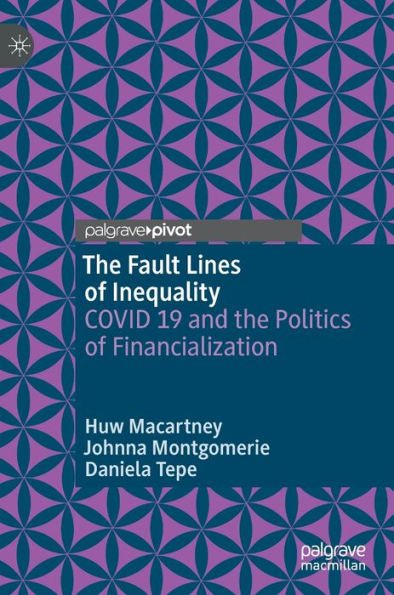
the Fault Lines of Inequality: COVID 19 and Politics Financialization in Bloomington, MN
Current price: $44.99

the Fault Lines of Inequality: COVID 19 and Politics Financialization in Bloomington, MN
Current price: $44.99
Loading Inventory...
Size: Hardcover
This book examines how decisions made by the Conservative government during the COVID19 pandemic have increased economic inequality in the UK. Decades of austerity, asset-based welfare and financialization had already exacerbated social divisions in the UK prior to the pandemic. The political blueprint behind these measures combined Privatized Keynesianism and the Asset Economy. To explain, economists have highlighted that inequality derives from the fact that income from wealth increases at a faster rate than income from wages. The ensuing political assumption is that – in the face of pressures on public finances – promoting asset ownership is the best alternative to government-funded welfare schemes. What this meant, as the pandemic unfolded, was that when tough decisions about resource allocation needed to be made, the UK Treasury and the Bank of England found almost unlimited funds to rescue and protect asset-holders and middle-income homeowners, whilst reverting to a narrative of “misfortune” for the asset-less poor. This book assesses the political decisions taken by UK policymakers during 2020-21 and their consequences. In doing so, it challenges policymakers and the informed public to re-consider the morality of inequality, and to make alternative decisions to promote a more ecologically sustainable, caring, equal and prosperous society.
This book examines how decisions made by the Conservative government during the COVID19 pandemic have increased economic inequality in the UK. Decades of austerity, asset-based welfare and financialization had already exacerbated social divisions in the UK prior to the pandemic. The political blueprint behind these measures combined Privatized Keynesianism and the Asset Economy. To explain, economists have highlighted that inequality derives from the fact that income from wealth increases at a faster rate than income from wages. The ensuing political assumption is that – in the face of pressures on public finances – promoting asset ownership is the best alternative to government-funded welfare schemes. What this meant, as the pandemic unfolded, was that when tough decisions about resource allocation needed to be made, the UK Treasury and the Bank of England found almost unlimited funds to rescue and protect asset-holders and middle-income homeowners, whilst reverting to a narrative of “misfortune” for the asset-less poor. This book assesses the political decisions taken by UK policymakers during 2020-21 and their consequences. In doing so, it challenges policymakers and the informed public to re-consider the morality of inequality, and to make alternative decisions to promote a more ecologically sustainable, caring, equal and prosperous society.
Shop Similar Products














Find at Mall of America® in Bloomington, MN
Visit at Mall of America® in Bloomington, MN