


Home
The European Community and the Crises of the 1960s: Negotiating the Gaullist Challenge
Barnes and Noble
Loading Inventory...
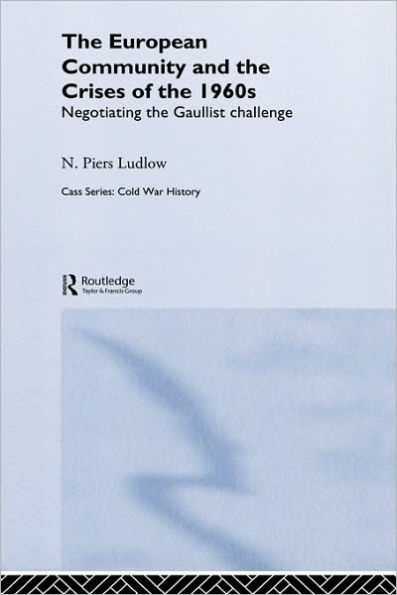
The European Community and the Crises of the 1960s: Negotiating the Gaullist Challenge in Bloomington, MN
Current price: $190.00

The European Community and the Crises of the 1960s: Negotiating the Gaullist Challenge in Bloomington, MN
Current price: $190.00
Loading Inventory...
Size: OS
A new and detailed study of the European Community's development between 1963 and 1969, with a special focus on the struggle between France and its EC partners over the purpose, structure and membership of the emerging European Community.
On all three, French President Charles de Gaulle held divergent views from those of his fellow leaders. The six years in question were hence marked by a succession of confrontations over what the Community did, the way in which it functioned, and the question of whether new members (notably Britain) should be allowed to enter. Despite these multiple crises, however, the six founding members continued to press on with their joint experiment, demonstrating a surprisingly firm commitment to cooperation with each other. The period thus highlights both the strengths and the weaknesses of the early Community and highlights the origins of many of the structures and procedures that have survived until the current day.
On all three, French President Charles de Gaulle held divergent views from those of his fellow leaders. The six years in question were hence marked by a succession of confrontations over what the Community did, the way in which it functioned, and the question of whether new members (notably Britain) should be allowed to enter. Despite these multiple crises, however, the six founding members continued to press on with their joint experiment, demonstrating a surprisingly firm commitment to cooperation with each other. The period thus highlights both the strengths and the weaknesses of the early Community and highlights the origins of many of the structures and procedures that have survived until the current day.
A new and detailed study of the European Community's development between 1963 and 1969, with a special focus on the struggle between France and its EC partners over the purpose, structure and membership of the emerging European Community.
On all three, French President Charles de Gaulle held divergent views from those of his fellow leaders. The six years in question were hence marked by a succession of confrontations over what the Community did, the way in which it functioned, and the question of whether new members (notably Britain) should be allowed to enter. Despite these multiple crises, however, the six founding members continued to press on with their joint experiment, demonstrating a surprisingly firm commitment to cooperation with each other. The period thus highlights both the strengths and the weaknesses of the early Community and highlights the origins of many of the structures and procedures that have survived until the current day.
On all three, French President Charles de Gaulle held divergent views from those of his fellow leaders. The six years in question were hence marked by a succession of confrontations over what the Community did, the way in which it functioned, and the question of whether new members (notably Britain) should be allowed to enter. Despite these multiple crises, however, the six founding members continued to press on with their joint experiment, demonstrating a surprisingly firm commitment to cooperation with each other. The period thus highlights both the strengths and the weaknesses of the early Community and highlights the origins of many of the structures and procedures that have survived until the current day.














Find at Mall of America® in Bloomington, MN
Visit at Mall of America® in Bloomington, MN