


Home
The Celestial Web: Buddhism and Christianity: A Different Comparison
Barnes and Noble
Loading Inventory...
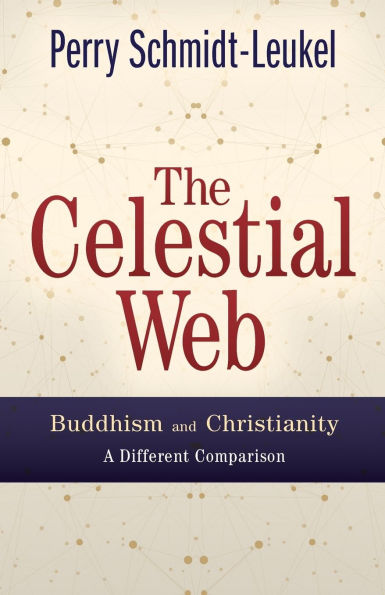
The Celestial Web: Buddhism and Christianity: A Different Comparison in Bloomington, MN
Current price: $55.00

The Celestial Web: Buddhism and Christianity: A Different Comparison in Bloomington, MN
Current price: $55.00
Loading Inventory...
Size: Paperback
A leading scholar of religion applies a new method of interfaith understanding to Buddhist-Christian comparative theology providing rich new insights for students and scholars alike.
In his ground-breaking Gifford Lectures, published as
Religious Pluralism & Interreligious Dialogue,
Perry Schmidt-Leukel introduced his “fractal” theory of religions, challenging the tendency to distinguish religious traditions as discrete entities without acknowledging the wide variety within them, varieties essentially reproduced in different religious traditions.
After offering an introduction to this new methodology to comparative religion, Schmidt-Leukel, in
The Celestial Web,
applies this method to a comparison between Buddhism and Christianity. Some of the points of comparison include their respective approaches to the world, ultimate reality, the “dark side” of human existence, and salvation/liberation in terms of the figures mediating it.
Stereotypical approaches often treat these traditions as opposites, for instance, positing that Buddhism embraces an impersonal absolute, whereas Christianity affirms the primacy of one’s relationship with a personal God. Yet the fractal approach, which examines “intra-religious” varieties within the two traditions, reveals surprising points of congruence.
In his ground-breaking Gifford Lectures, published as
Religious Pluralism & Interreligious Dialogue,
Perry Schmidt-Leukel introduced his “fractal” theory of religions, challenging the tendency to distinguish religious traditions as discrete entities without acknowledging the wide variety within them, varieties essentially reproduced in different religious traditions.
After offering an introduction to this new methodology to comparative religion, Schmidt-Leukel, in
The Celestial Web,
applies this method to a comparison between Buddhism and Christianity. Some of the points of comparison include their respective approaches to the world, ultimate reality, the “dark side” of human existence, and salvation/liberation in terms of the figures mediating it.
Stereotypical approaches often treat these traditions as opposites, for instance, positing that Buddhism embraces an impersonal absolute, whereas Christianity affirms the primacy of one’s relationship with a personal God. Yet the fractal approach, which examines “intra-religious” varieties within the two traditions, reveals surprising points of congruence.
A leading scholar of religion applies a new method of interfaith understanding to Buddhist-Christian comparative theology providing rich new insights for students and scholars alike.
In his ground-breaking Gifford Lectures, published as
Religious Pluralism & Interreligious Dialogue,
Perry Schmidt-Leukel introduced his “fractal” theory of religions, challenging the tendency to distinguish religious traditions as discrete entities without acknowledging the wide variety within them, varieties essentially reproduced in different religious traditions.
After offering an introduction to this new methodology to comparative religion, Schmidt-Leukel, in
The Celestial Web,
applies this method to a comparison between Buddhism and Christianity. Some of the points of comparison include their respective approaches to the world, ultimate reality, the “dark side” of human existence, and salvation/liberation in terms of the figures mediating it.
Stereotypical approaches often treat these traditions as opposites, for instance, positing that Buddhism embraces an impersonal absolute, whereas Christianity affirms the primacy of one’s relationship with a personal God. Yet the fractal approach, which examines “intra-religious” varieties within the two traditions, reveals surprising points of congruence.
In his ground-breaking Gifford Lectures, published as
Religious Pluralism & Interreligious Dialogue,
Perry Schmidt-Leukel introduced his “fractal” theory of religions, challenging the tendency to distinguish religious traditions as discrete entities without acknowledging the wide variety within them, varieties essentially reproduced in different religious traditions.
After offering an introduction to this new methodology to comparative religion, Schmidt-Leukel, in
The Celestial Web,
applies this method to a comparison between Buddhism and Christianity. Some of the points of comparison include their respective approaches to the world, ultimate reality, the “dark side” of human existence, and salvation/liberation in terms of the figures mediating it.
Stereotypical approaches often treat these traditions as opposites, for instance, positing that Buddhism embraces an impersonal absolute, whereas Christianity affirms the primacy of one’s relationship with a personal God. Yet the fractal approach, which examines “intra-religious” varieties within the two traditions, reveals surprising points of congruence.
Shop Similar Products















Find at Mall of America® in Bloomington, MN
Visit at Mall of America® in Bloomington, MN