


Home
The Anti-Education Era: Creating Smarter Students through Digital Learning
Barnes and Noble
Loading Inventory...

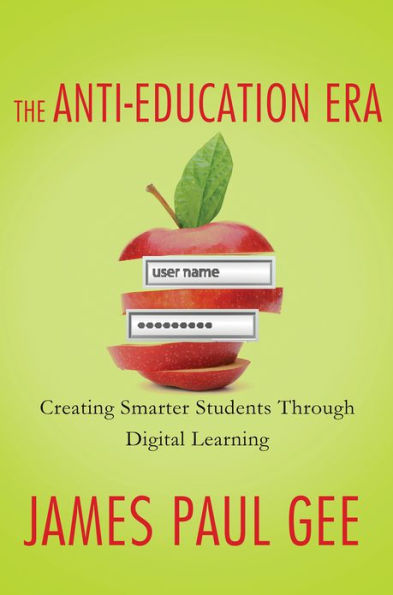
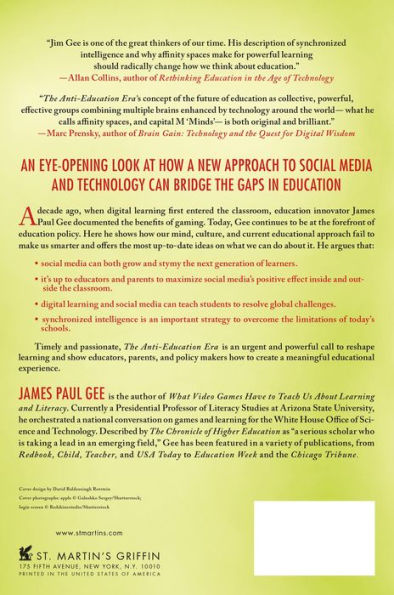
The Anti-Education Era: Creating Smarter Students through Digital Learning in Bloomington, MN
Current price: $19.99

The Anti-Education Era: Creating Smarter Students through Digital Learning in Bloomington, MN
Current price: $19.99
Loading Inventory...
Size: Paperback
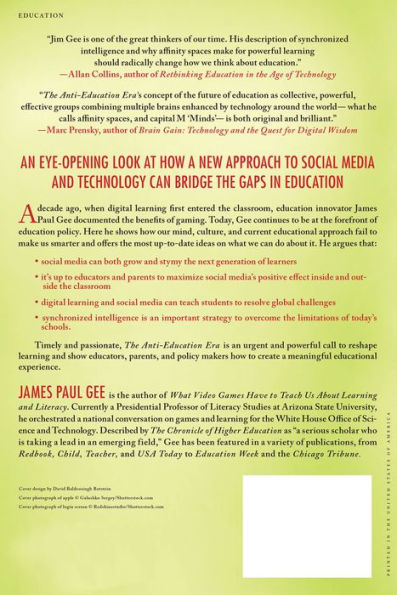
One of the first champions of the positive effects of gaming reveals the dark side of today's digital and social media
Today's schools are eager to use the latest technology in the classroom, but rather than improving learning, the new e-media can just as easily narrow students' horizons. Education innovator James Paul Gee first documented the educational benefits of gaming a decade ago in his classic
What Video Games Have to Teach Us About Learning and Literacy
. Now, with digital and social media at the center of modern life, he issues an important warning that groundbreaking new technologies, far from revolutionizing schooling, can stymy the next generation's ability to resolve deep global challenges. The solution-and perhaps our children's future-lies in what Gee calls synchronized intelligence, a way of organizing people and their digital tools to solve problems, produce knowledge, and allow people to count and contribute. Gee explores important strategies and tools for today's parents, educators, and policy makers, including virtual worlds, artificial tutors, and ways to create collective intelligence where everyday people can solve hard problems. By harnessing the power of human creativity with interactional and technological sophistication we can finally overcome the limitations of today's failing educational system and solve problems in our high-risk global world.
The Anti-Education Era
is a powerful and important call to reshape digital learning, engage children in a meaningful educational experience, and bridge inequality.
Today's schools are eager to use the latest technology in the classroom, but rather than improving learning, the new e-media can just as easily narrow students' horizons. Education innovator James Paul Gee first documented the educational benefits of gaming a decade ago in his classic
What Video Games Have to Teach Us About Learning and Literacy
. Now, with digital and social media at the center of modern life, he issues an important warning that groundbreaking new technologies, far from revolutionizing schooling, can stymy the next generation's ability to resolve deep global challenges. The solution-and perhaps our children's future-lies in what Gee calls synchronized intelligence, a way of organizing people and their digital tools to solve problems, produce knowledge, and allow people to count and contribute. Gee explores important strategies and tools for today's parents, educators, and policy makers, including virtual worlds, artificial tutors, and ways to create collective intelligence where everyday people can solve hard problems. By harnessing the power of human creativity with interactional and technological sophistication we can finally overcome the limitations of today's failing educational system and solve problems in our high-risk global world.
The Anti-Education Era
is a powerful and important call to reshape digital learning, engage children in a meaningful educational experience, and bridge inequality.
One of the first champions of the positive effects of gaming reveals the dark side of today's digital and social media
Today's schools are eager to use the latest technology in the classroom, but rather than improving learning, the new e-media can just as easily narrow students' horizons. Education innovator James Paul Gee first documented the educational benefits of gaming a decade ago in his classic
What Video Games Have to Teach Us About Learning and Literacy
. Now, with digital and social media at the center of modern life, he issues an important warning that groundbreaking new technologies, far from revolutionizing schooling, can stymy the next generation's ability to resolve deep global challenges. The solution-and perhaps our children's future-lies in what Gee calls synchronized intelligence, a way of organizing people and their digital tools to solve problems, produce knowledge, and allow people to count and contribute. Gee explores important strategies and tools for today's parents, educators, and policy makers, including virtual worlds, artificial tutors, and ways to create collective intelligence where everyday people can solve hard problems. By harnessing the power of human creativity with interactional and technological sophistication we can finally overcome the limitations of today's failing educational system and solve problems in our high-risk global world.
The Anti-Education Era
is a powerful and important call to reshape digital learning, engage children in a meaningful educational experience, and bridge inequality.
Today's schools are eager to use the latest technology in the classroom, but rather than improving learning, the new e-media can just as easily narrow students' horizons. Education innovator James Paul Gee first documented the educational benefits of gaming a decade ago in his classic
What Video Games Have to Teach Us About Learning and Literacy
. Now, with digital and social media at the center of modern life, he issues an important warning that groundbreaking new technologies, far from revolutionizing schooling, can stymy the next generation's ability to resolve deep global challenges. The solution-and perhaps our children's future-lies in what Gee calls synchronized intelligence, a way of organizing people and their digital tools to solve problems, produce knowledge, and allow people to count and contribute. Gee explores important strategies and tools for today's parents, educators, and policy makers, including virtual worlds, artificial tutors, and ways to create collective intelligence where everyday people can solve hard problems. By harnessing the power of human creativity with interactional and technological sophistication we can finally overcome the limitations of today's failing educational system and solve problems in our high-risk global world.
The Anti-Education Era
is a powerful and important call to reshape digital learning, engage children in a meaningful educational experience, and bridge inequality.
Shop Similar Products











Find at Mall of America® in Bloomington, MN
Visit at Mall of America® in Bloomington, MN