


Home
Steps to Follow: The Comprehensive Treatment of Patients with Hemiplegia
Barnes and Noble
Loading Inventory...
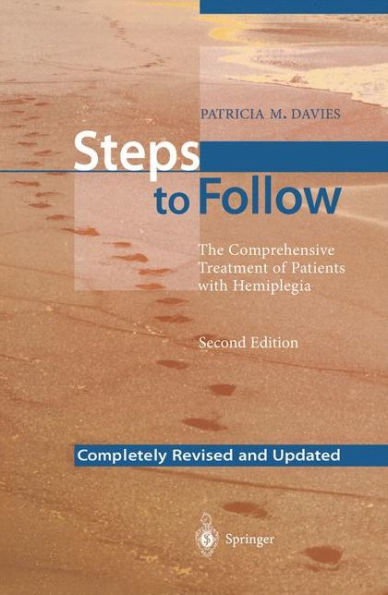
Steps to Follow: The Comprehensive Treatment of Patients with Hemiplegia in Bloomington, MN
Current price: $99.99

Steps to Follow: The Comprehensive Treatment of Patients with Hemiplegia in Bloomington, MN
Current price: $99.99
Loading Inventory...
Size: OS
A true paradigm shift is taking place in the field of neurology. Earlier it was regarded as the science of exact diagnosis of incurable illnesses, re signed to the dogma that damage to the central nervous system could not be repaired: "Once development is complete, the sources of growth and regeneration ofaxons and dendrites are irretrievably lost. In the adult brain the nerve paths are fixed and immutable - everything can die, but nothing can be regenerated" (Cajal1928). Even then this could have been countered with what holds today: rehabilitation does not take place in the test tube, being supported only a short time later by an authoritative source, the professor of neurology and neurosurgery in Breslau, Otfried Foerster. He wrote a 100-page article about therapeutic exercises which appeared in the Handbuch der Neurologie (also published by Springer-Verlag). The following sentences from his introduction illustrate his opinion of the importance of therapeutic exercises and areclose to our views today (Foerster 1936): "There is no doubt that most motor disturbances caused by lesions of the nervous system are more or less completely compensated as a re sult of a tendency inherent to the organism to carry out as expedient ly as possible the tasks of which it is capable under normal circum stances, using all the forces still available to it with the remaining un damaged parts of the nervous system, even following injury to its sub
A true paradigm shift is taking place in the field of neurology. Earlier it was regarded as the science of exact diagnosis of incurable illnesses, re signed to the dogma that damage to the central nervous system could not be repaired: "Once development is complete, the sources of growth and regeneration ofaxons and dendrites are irretrievably lost. In the adult brain the nerve paths are fixed and immutable - everything can die, but nothing can be regenerated" (Cajal1928). Even then this could have been countered with what holds today: rehabilitation does not take place in the test tube, being supported only a short time later by an authoritative source, the professor of neurology and neurosurgery in Breslau, Otfried Foerster. He wrote a 100-page article about therapeutic exercises which appeared in the Handbuch der Neurologie (also published by Springer-Verlag). The following sentences from his introduction illustrate his opinion of the importance of therapeutic exercises and areclose to our views today (Foerster 1936): "There is no doubt that most motor disturbances caused by lesions of the nervous system are more or less completely compensated as a re sult of a tendency inherent to the organism to carry out as expedient ly as possible the tasks of which it is capable under normal circum stances, using all the forces still available to it with the remaining un damaged parts of the nervous system, even following injury to its sub
Shop Similar Products















Find at Mall of America® in Bloomington, MN
Visit at Mall of America® in Bloomington, MN