


Home
Slavery, Southern Culture, and Education Little Dixie, Missouri, 1820-1860
Barnes and Noble
Loading Inventory...
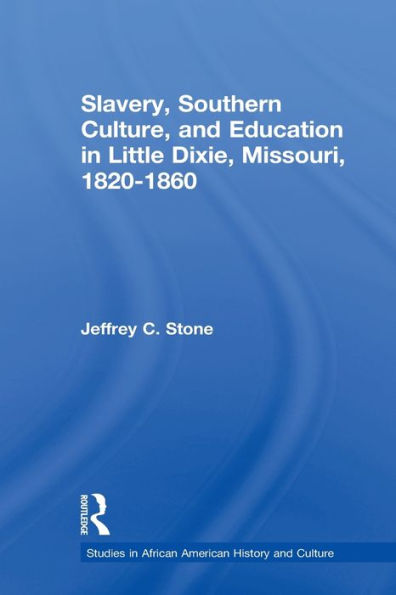
Slavery, Southern Culture, and Education Little Dixie, Missouri, 1820-1860 in Bloomington, MN
Current price: $58.99

Slavery, Southern Culture, and Education Little Dixie, Missouri, 1820-1860 in Bloomington, MN
Current price: $58.99
Loading Inventory...
Size: Paperback
This dissertation examines the cultural and educational history of central Missouri between 1820 and 1860, and in particular, the issue of master-slave relationships and how they affected education (broadly defined as the transmission of Southern culture). Although Missouri had one of the lowest slave populations during the Antebellum period, Central Missouri - or what became known as Little Dixie - had slave percentages that rivaled many regions and counties of the Deep South. However, slaves and slave owners interacted on a regular basis, which affected cultural transmission in the areas of religion, work, and community. Generally, slave owners in Little Dixie showed a pattern of paternalism in all these areas, but the slaves did not always accept their masters' paternalism, and attempted to forge a life of their own.
This dissertation examines the cultural and educational history of central Missouri between 1820 and 1860, and in particular, the issue of master-slave relationships and how they affected education (broadly defined as the transmission of Southern culture). Although Missouri had one of the lowest slave populations during the Antebellum period, Central Missouri - or what became known as Little Dixie - had slave percentages that rivaled many regions and counties of the Deep South. However, slaves and slave owners interacted on a regular basis, which affected cultural transmission in the areas of religion, work, and community. Generally, slave owners in Little Dixie showed a pattern of paternalism in all these areas, but the slaves did not always accept their masters' paternalism, and attempted to forge a life of their own.
Shop Similar Products






Find at Mall of America® in Bloomington, MN
Visit at Mall of America® in Bloomington, MN