


Home
Silent Coup: the Selection of 2020:The Implementation Zer Interest Rate Policy and Rise Covid-19 Pandemic
Barnes and Noble
Loading Inventory...
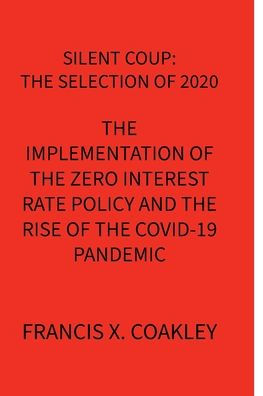
Silent Coup: the Selection of 2020:The Implementation Zer Interest Rate Policy and Rise Covid-19 Pandemic in Bloomington, MN
Current price: $24.95
Silent Coup: the Selection of 2020:The Implementation Zer Interest Rate Policy and Rise Covid-19 Pandemic in Bloomington, MN
Current price: $24.95
Loading Inventory...
Size: Hardcover
From 1998 to 2018, Japan suffered two huge seven-year recessions. During this same period, the Government of Japan reduced its interest payments on its National Debt from 11 Trillion Yen on a national debt of 192 Trillion Yen in 1992, to 7.8 Trillion Yen on a National Debt of 998 Trillion Yen in 2018.
During the first recession, the Bank of Japan held interest rates at Zero for 2,500 days while simultaneously implementing 67 months of Quantitative Easing, from February 12, 1999, to July 14, 2006.
During the Obama Fiasco, the Federal Reserve Bank instituted a Zero Interest Rate Policy from December 16, 2008, to December 16, 2015. This accounted for a Zero Interest Rate Policy of 2554 days. During this same period, the Federal Reserve Bank instituted 68 months of Quantitative Easing.
On October 5, 2010, the Bank of Japan instituted Comprehensive Monetary Easing, which included purchases of Japanese Government Bonds at market price, while interest rates were at Zero. Quantitative Easing. This occured 1544 days after having first raised interest rates on July 14, 2006.
On March 15, 2020, the FEDERAL RESERVE BANK, in response to the COVID-19 PANDEMIC, reinstituted its Quantitative Easing Policies. This occurred 1551 days after having first raised interest rates on December 16, 2015.
During the first recession, the Bank of Japan held interest rates at Zero for 2,500 days while simultaneously implementing 67 months of Quantitative Easing, from February 12, 1999, to July 14, 2006.
During the Obama Fiasco, the Federal Reserve Bank instituted a Zero Interest Rate Policy from December 16, 2008, to December 16, 2015. This accounted for a Zero Interest Rate Policy of 2554 days. During this same period, the Federal Reserve Bank instituted 68 months of Quantitative Easing.
On October 5, 2010, the Bank of Japan instituted Comprehensive Monetary Easing, which included purchases of Japanese Government Bonds at market price, while interest rates were at Zero. Quantitative Easing. This occured 1544 days after having first raised interest rates on July 14, 2006.
On March 15, 2020, the FEDERAL RESERVE BANK, in response to the COVID-19 PANDEMIC, reinstituted its Quantitative Easing Policies. This occurred 1551 days after having first raised interest rates on December 16, 2015.
From 1998 to 2018, Japan suffered two huge seven-year recessions. During this same period, the Government of Japan reduced its interest payments on its National Debt from 11 Trillion Yen on a national debt of 192 Trillion Yen in 1992, to 7.8 Trillion Yen on a National Debt of 998 Trillion Yen in 2018.
During the first recession, the Bank of Japan held interest rates at Zero for 2,500 days while simultaneously implementing 67 months of Quantitative Easing, from February 12, 1999, to July 14, 2006.
During the Obama Fiasco, the Federal Reserve Bank instituted a Zero Interest Rate Policy from December 16, 2008, to December 16, 2015. This accounted for a Zero Interest Rate Policy of 2554 days. During this same period, the Federal Reserve Bank instituted 68 months of Quantitative Easing.
On October 5, 2010, the Bank of Japan instituted Comprehensive Monetary Easing, which included purchases of Japanese Government Bonds at market price, while interest rates were at Zero. Quantitative Easing. This occured 1544 days after having first raised interest rates on July 14, 2006.
On March 15, 2020, the FEDERAL RESERVE BANK, in response to the COVID-19 PANDEMIC, reinstituted its Quantitative Easing Policies. This occurred 1551 days after having first raised interest rates on December 16, 2015.
During the first recession, the Bank of Japan held interest rates at Zero for 2,500 days while simultaneously implementing 67 months of Quantitative Easing, from February 12, 1999, to July 14, 2006.
During the Obama Fiasco, the Federal Reserve Bank instituted a Zero Interest Rate Policy from December 16, 2008, to December 16, 2015. This accounted for a Zero Interest Rate Policy of 2554 days. During this same period, the Federal Reserve Bank instituted 68 months of Quantitative Easing.
On October 5, 2010, the Bank of Japan instituted Comprehensive Monetary Easing, which included purchases of Japanese Government Bonds at market price, while interest rates were at Zero. Quantitative Easing. This occured 1544 days after having first raised interest rates on July 14, 2006.
On March 15, 2020, the FEDERAL RESERVE BANK, in response to the COVID-19 PANDEMIC, reinstituted its Quantitative Easing Policies. This occurred 1551 days after having first raised interest rates on December 16, 2015.
Shop Similar Products








Find at Mall of America® in Bloomington, MN
Visit at Mall of America® in Bloomington, MN