


Home
Shamanism: The Timeless Religion
Barnes and Noble
Loading Inventory...
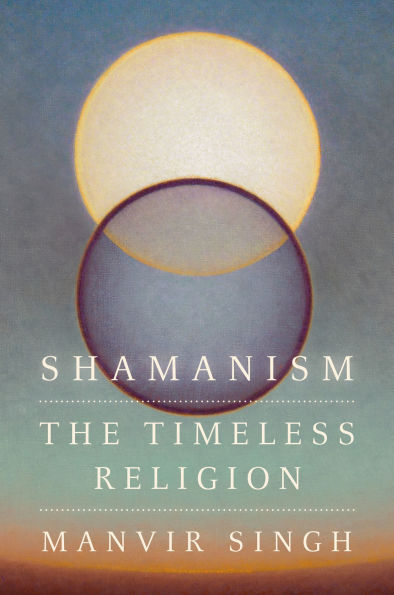
Shamanism: The Timeless Religion in Bloomington, MN
Current price: $22.00

Shamanism: The Timeless Religion in Bloomington, MN
Current price: $22.00
Loading Inventory...
Size: Audiobook
From a brilliant, young, Harvard-trained anthropologist and contributor to
The New Yorker
comes a fascinating investigation into the spiritual practice of shamanism, from its beginnings to the present moment, for readers disaffected with organized religion who seek a more personal approach to spirituality.
What are the origins of shamanism, and what is its future? Do shamans believe in their powers? What exactly is trance? What can we learn from indigenous healing practices?
Traveling from Indonesia to the Colombian Amazon, living with shamans and observing music, drug use, and indigenous curing ceremonies, anthropologist Manvir Singh journeys into one of the most mysterious religious traditions. Fundamentally, shamans are specialists who use altered states to engage with unseen realms and provide services like healing and divination. As Singh shows, shamanism’s appeal stems from its psychological resonance. Its essence is spiritual transformation: a specialist uses initiations, deprivation, and non-ordinary states to seemingly become a different kind of human, one possessed of powers to cure, prophesy, and otherwise tame life’s uncertainties.
Following a fascinating cast of characters, Singh reveals the complexities and vicissitudes of a timeless, always relevant, and ubiquitous phenomenon. He argues that biomedicine can learn from shamanic practices and that psychedelic enthusiasts completely misrepresent history. He also shows that shamanic traditions will forever re-emerge – and that by contemplating humanity’s oldest spiritual practice, we come to better understand ourselves, our history, and our future.
The New Yorker
comes a fascinating investigation into the spiritual practice of shamanism, from its beginnings to the present moment, for readers disaffected with organized religion who seek a more personal approach to spirituality.
What are the origins of shamanism, and what is its future? Do shamans believe in their powers? What exactly is trance? What can we learn from indigenous healing practices?
Traveling from Indonesia to the Colombian Amazon, living with shamans and observing music, drug use, and indigenous curing ceremonies, anthropologist Manvir Singh journeys into one of the most mysterious religious traditions. Fundamentally, shamans are specialists who use altered states to engage with unseen realms and provide services like healing and divination. As Singh shows, shamanism’s appeal stems from its psychological resonance. Its essence is spiritual transformation: a specialist uses initiations, deprivation, and non-ordinary states to seemingly become a different kind of human, one possessed of powers to cure, prophesy, and otherwise tame life’s uncertainties.
Following a fascinating cast of characters, Singh reveals the complexities and vicissitudes of a timeless, always relevant, and ubiquitous phenomenon. He argues that biomedicine can learn from shamanic practices and that psychedelic enthusiasts completely misrepresent history. He also shows that shamanic traditions will forever re-emerge – and that by contemplating humanity’s oldest spiritual practice, we come to better understand ourselves, our history, and our future.
From a brilliant, young, Harvard-trained anthropologist and contributor to
The New Yorker
comes a fascinating investigation into the spiritual practice of shamanism, from its beginnings to the present moment, for readers disaffected with organized religion who seek a more personal approach to spirituality.
What are the origins of shamanism, and what is its future? Do shamans believe in their powers? What exactly is trance? What can we learn from indigenous healing practices?
Traveling from Indonesia to the Colombian Amazon, living with shamans and observing music, drug use, and indigenous curing ceremonies, anthropologist Manvir Singh journeys into one of the most mysterious religious traditions. Fundamentally, shamans are specialists who use altered states to engage with unseen realms and provide services like healing and divination. As Singh shows, shamanism’s appeal stems from its psychological resonance. Its essence is spiritual transformation: a specialist uses initiations, deprivation, and non-ordinary states to seemingly become a different kind of human, one possessed of powers to cure, prophesy, and otherwise tame life’s uncertainties.
Following a fascinating cast of characters, Singh reveals the complexities and vicissitudes of a timeless, always relevant, and ubiquitous phenomenon. He argues that biomedicine can learn from shamanic practices and that psychedelic enthusiasts completely misrepresent history. He also shows that shamanic traditions will forever re-emerge – and that by contemplating humanity’s oldest spiritual practice, we come to better understand ourselves, our history, and our future.
The New Yorker
comes a fascinating investigation into the spiritual practice of shamanism, from its beginnings to the present moment, for readers disaffected with organized religion who seek a more personal approach to spirituality.
What are the origins of shamanism, and what is its future? Do shamans believe in their powers? What exactly is trance? What can we learn from indigenous healing practices?
Traveling from Indonesia to the Colombian Amazon, living with shamans and observing music, drug use, and indigenous curing ceremonies, anthropologist Manvir Singh journeys into one of the most mysterious religious traditions. Fundamentally, shamans are specialists who use altered states to engage with unseen realms and provide services like healing and divination. As Singh shows, shamanism’s appeal stems from its psychological resonance. Its essence is spiritual transformation: a specialist uses initiations, deprivation, and non-ordinary states to seemingly become a different kind of human, one possessed of powers to cure, prophesy, and otherwise tame life’s uncertainties.
Following a fascinating cast of characters, Singh reveals the complexities and vicissitudes of a timeless, always relevant, and ubiquitous phenomenon. He argues that biomedicine can learn from shamanic practices and that psychedelic enthusiasts completely misrepresent history. He also shows that shamanic traditions will forever re-emerge – and that by contemplating humanity’s oldest spiritual practice, we come to better understand ourselves, our history, and our future.
Shop Similar Products















Find at Mall of America® in Bloomington, MN
Visit at Mall of America® in Bloomington, MN