


Home
Religion and Custom in a Muslim Society: The Berti of Sudan
Barnes and Noble
Loading Inventory...
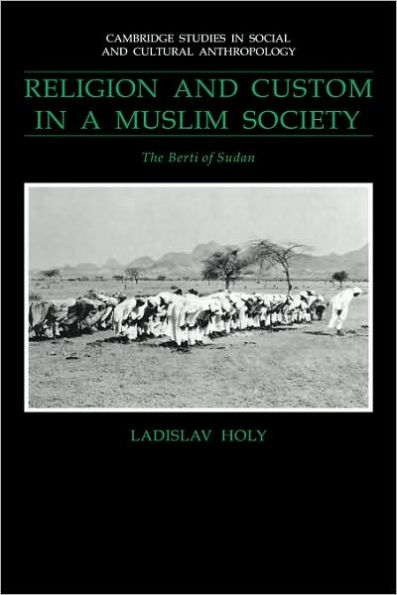
Religion and Custom in a Muslim Society: The Berti of Sudan in Bloomington, MN
Current price: $60.00
Religion and Custom in a Muslim Society: The Berti of Sudan in Bloomington, MN
Current price: $60.00
Loading Inventory...
Size: OS
Among the Berti of Northern Darfur (Sudan), as among many Muslim societies, the formal religious practices are predominantly the concern of men, while local, unorthodox customary rituals are performed mainly by women. It is usual to dismiss such local, popular practices as pre-Islamic survivals, but Professor Holy shows that the customary rituals constitute an integral part of the religious system of the Berti. Carefully analysing the symbolic statements made in Berti rituals, Professor Holy demonstrates that the distinction between the two classes of rituals is an expression of the gender relationships characteristic of the society. He also examines the social distribution of knowledge about Islam, and explains the role of the religious schools in sustaining religious ideas. The work is not only an ethnographic study of ritual, belief and gender in an African society. It also makes a significant contribution to current anthropological discussion of the interpretation and meaning of rituals and symbols.
Among the Berti of Northern Darfur (Sudan), as among many Muslim societies, the formal religious practices are predominantly the concern of men, while local, unorthodox customary rituals are performed mainly by women. It is usual to dismiss such local, popular practices as pre-Islamic survivals, but Professor Holy shows that the customary rituals constitute an integral part of the religious system of the Berti. Carefully analysing the symbolic statements made in Berti rituals, Professor Holy demonstrates that the distinction between the two classes of rituals is an expression of the gender relationships characteristic of the society. He also examines the social distribution of knowledge about Islam, and explains the role of the religious schools in sustaining religious ideas. The work is not only an ethnographic study of ritual, belief and gender in an African society. It also makes a significant contribution to current anthropological discussion of the interpretation and meaning of rituals and symbols.
Shop Similar Products

![Crime and Custom Savage Society: [1926/1940]](https://prodimage.images-bn.com/pimages/9780415488365_p0_v2_s600x595.jpg)



Find at Mall of America® in Bloomington, MN
Visit at Mall of America® in Bloomington, MN