


Home
Patronage and Power the Medieval Welsh March: One Family's Story
Barnes and Noble
Loading Inventory...
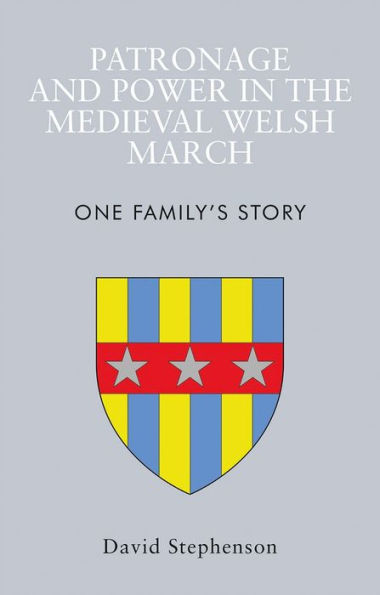
Patronage and Power the Medieval Welsh March: One Family's Story in Bloomington, MN
Current price: $19.00

Patronage and Power the Medieval Welsh March: One Family's Story in Bloomington, MN
Current price: $19.00
Loading Inventory...
Size: Paperback
An in-depth study of a medieval Welsh family that illuminates the social and political conditions of their time.
Patronage and Power in the Medieval Welsh March
presents an in-depth account of a single Welsh family from the thirteenth to the fifteenth century. Though the family was of obscure and modest origins, the patronage of great lords of the Marchsuch as the Mortimers of Wigmore or the de Bohun earls of Herefordhelped them to become prominent in Wales and the March, and, increasingly over the period, in England. They helped to bring down anyone opposed by their patrons, such as Llywelyn, Prince of Wales in the thirteenth century, or Edward II in the 1320s. In the process, they sometimes faced great danger, but they contrived to prosper, and members of one branch even became Marcher lords themselves. Another branch, meanwhile, was prominent in Welsh and English government, becoming diplomats and courtiers of English kings, and over five generations many achieved knighthood. Their varied and interesting careers and paths through society suggest, David Stephenson argues, that Welsh society of the period may have been more open than is generally supposed. Through the story of this one family, we gain new insight into medieval Wales.
Patronage and Power in the Medieval Welsh March
presents an in-depth account of a single Welsh family from the thirteenth to the fifteenth century. Though the family was of obscure and modest origins, the patronage of great lords of the Marchsuch as the Mortimers of Wigmore or the de Bohun earls of Herefordhelped them to become prominent in Wales and the March, and, increasingly over the period, in England. They helped to bring down anyone opposed by their patrons, such as Llywelyn, Prince of Wales in the thirteenth century, or Edward II in the 1320s. In the process, they sometimes faced great danger, but they contrived to prosper, and members of one branch even became Marcher lords themselves. Another branch, meanwhile, was prominent in Welsh and English government, becoming diplomats and courtiers of English kings, and over five generations many achieved knighthood. Their varied and interesting careers and paths through society suggest, David Stephenson argues, that Welsh society of the period may have been more open than is generally supposed. Through the story of this one family, we gain new insight into medieval Wales.
An in-depth study of a medieval Welsh family that illuminates the social and political conditions of their time.
Patronage and Power in the Medieval Welsh March
presents an in-depth account of a single Welsh family from the thirteenth to the fifteenth century. Though the family was of obscure and modest origins, the patronage of great lords of the Marchsuch as the Mortimers of Wigmore or the de Bohun earls of Herefordhelped them to become prominent in Wales and the March, and, increasingly over the period, in England. They helped to bring down anyone opposed by their patrons, such as Llywelyn, Prince of Wales in the thirteenth century, or Edward II in the 1320s. In the process, they sometimes faced great danger, but they contrived to prosper, and members of one branch even became Marcher lords themselves. Another branch, meanwhile, was prominent in Welsh and English government, becoming diplomats and courtiers of English kings, and over five generations many achieved knighthood. Their varied and interesting careers and paths through society suggest, David Stephenson argues, that Welsh society of the period may have been more open than is generally supposed. Through the story of this one family, we gain new insight into medieval Wales.
Patronage and Power in the Medieval Welsh March
presents an in-depth account of a single Welsh family from the thirteenth to the fifteenth century. Though the family was of obscure and modest origins, the patronage of great lords of the Marchsuch as the Mortimers of Wigmore or the de Bohun earls of Herefordhelped them to become prominent in Wales and the March, and, increasingly over the period, in England. They helped to bring down anyone opposed by their patrons, such as Llywelyn, Prince of Wales in the thirteenth century, or Edward II in the 1320s. In the process, they sometimes faced great danger, but they contrived to prosper, and members of one branch even became Marcher lords themselves. Another branch, meanwhile, was prominent in Welsh and English government, becoming diplomats and courtiers of English kings, and over five generations many achieved knighthood. Their varied and interesting careers and paths through society suggest, David Stephenson argues, that Welsh society of the period may have been more open than is generally supposed. Through the story of this one family, we gain new insight into medieval Wales.
Shop Similar Products















Find at Mall of America® in Bloomington, MN
Visit at Mall of America® in Bloomington, MN