


Home
On the Other Hand: Left Hand, Right Brain, Mental Disorder, and History
Barnes and Noble
Loading Inventory...
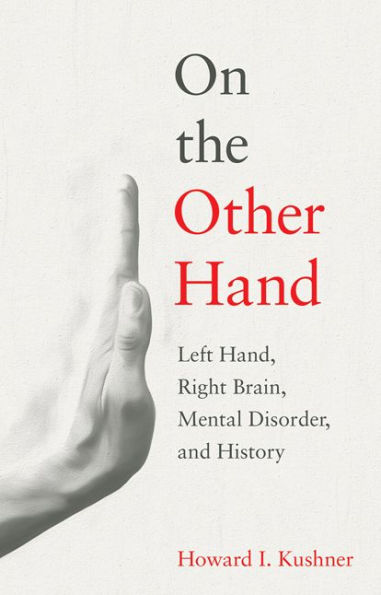
On the Other Hand: Left Hand, Right Brain, Mental Disorder, and History in Bloomington, MN
Current price: $29.95

On the Other Hand: Left Hand, Right Brain, Mental Disorder, and History in Bloomington, MN
Current price: $29.95
Loading Inventory...
Size: Hardcover
Does being left-handed make a person different in any way that matters?
Since the late Stone Age, approximately 10 percent of humans have been left-handed, yet for most of human history left-handedness has been stigmatized. In
On the Other Hand
, Howard I. Kushner traces the impact of left-handedness on human cognition, behavior, culture, and health.
A left-hander himself, Kushner has long been interested in the meanings associated with left-handedness, and ultimately with whether hand preference can even be defined in a significant way. As he explores the medical and cultural history of left-handedness, Kushner describes the associated taboos, rituals, and stigma from around the globe. The words “left” and “left hand” have negative connotations in all languages, and left-handers have even historically been viewed as disabled.
In this comprehensive history of left-handedness, Kushner asks why left-handedness exists. He examines the relationship—if any—between handedness, linguistics, and learning disabilities, reveals how toleration of left-handedness serves as a barometer of wider cultural toleration and permissiveness, and wonders why the reported number of left-handers is significantly lower in Asia and Africa than in the West. Written in a lively style that mixes personal biography with scholarly research,
tells a comprehensive story about the science, traditions, and prejudices surrounding left-handedness.
Since the late Stone Age, approximately 10 percent of humans have been left-handed, yet for most of human history left-handedness has been stigmatized. In
On the Other Hand
, Howard I. Kushner traces the impact of left-handedness on human cognition, behavior, culture, and health.
A left-hander himself, Kushner has long been interested in the meanings associated with left-handedness, and ultimately with whether hand preference can even be defined in a significant way. As he explores the medical and cultural history of left-handedness, Kushner describes the associated taboos, rituals, and stigma from around the globe. The words “left” and “left hand” have negative connotations in all languages, and left-handers have even historically been viewed as disabled.
In this comprehensive history of left-handedness, Kushner asks why left-handedness exists. He examines the relationship—if any—between handedness, linguistics, and learning disabilities, reveals how toleration of left-handedness serves as a barometer of wider cultural toleration and permissiveness, and wonders why the reported number of left-handers is significantly lower in Asia and Africa than in the West. Written in a lively style that mixes personal biography with scholarly research,
tells a comprehensive story about the science, traditions, and prejudices surrounding left-handedness.
Does being left-handed make a person different in any way that matters?
Since the late Stone Age, approximately 10 percent of humans have been left-handed, yet for most of human history left-handedness has been stigmatized. In
On the Other Hand
, Howard I. Kushner traces the impact of left-handedness on human cognition, behavior, culture, and health.
A left-hander himself, Kushner has long been interested in the meanings associated with left-handedness, and ultimately with whether hand preference can even be defined in a significant way. As he explores the medical and cultural history of left-handedness, Kushner describes the associated taboos, rituals, and stigma from around the globe. The words “left” and “left hand” have negative connotations in all languages, and left-handers have even historically been viewed as disabled.
In this comprehensive history of left-handedness, Kushner asks why left-handedness exists. He examines the relationship—if any—between handedness, linguistics, and learning disabilities, reveals how toleration of left-handedness serves as a barometer of wider cultural toleration and permissiveness, and wonders why the reported number of left-handers is significantly lower in Asia and Africa than in the West. Written in a lively style that mixes personal biography with scholarly research,
tells a comprehensive story about the science, traditions, and prejudices surrounding left-handedness.
Since the late Stone Age, approximately 10 percent of humans have been left-handed, yet for most of human history left-handedness has been stigmatized. In
On the Other Hand
, Howard I. Kushner traces the impact of left-handedness on human cognition, behavior, culture, and health.
A left-hander himself, Kushner has long been interested in the meanings associated with left-handedness, and ultimately with whether hand preference can even be defined in a significant way. As he explores the medical and cultural history of left-handedness, Kushner describes the associated taboos, rituals, and stigma from around the globe. The words “left” and “left hand” have negative connotations in all languages, and left-handers have even historically been viewed as disabled.
In this comprehensive history of left-handedness, Kushner asks why left-handedness exists. He examines the relationship—if any—between handedness, linguistics, and learning disabilities, reveals how toleration of left-handedness serves as a barometer of wider cultural toleration and permissiveness, and wonders why the reported number of left-handers is significantly lower in Asia and Africa than in the West. Written in a lively style that mixes personal biography with scholarly research,
tells a comprehensive story about the science, traditions, and prejudices surrounding left-handedness.














Find at Mall of America® in Bloomington, MN
Visit at Mall of America® in Bloomington, MN