


Home
New Medieval Literatures 23
Barnes and Noble
Loading Inventory...
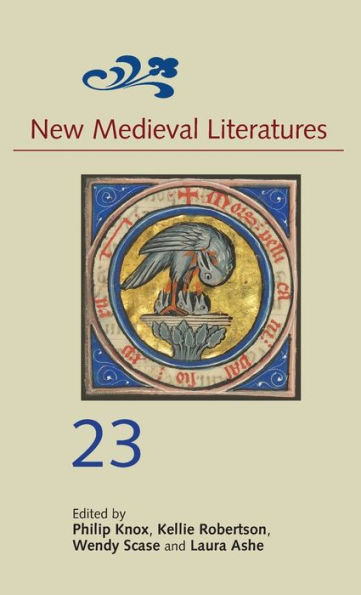
New Medieval Literatures 23 in Bloomington, MN
Current price: $95.00

New Medieval Literatures 23 in Bloomington, MN
Current price: $95.00
Loading Inventory...
Size: OS
Annual volume on medieval textual cultures, engaging with intellectual and cultural pluralism in the Middle Ages, showcasing the best new work in this field.
New Medieval Literatures
is an annual of work on medieval textual cultures, aiming to engage with intellectual and cultural pluralism in the Middle Ages and now. Its scope is inclusive of work across the theoretical, archival, philological, and historicist methodologies associated with medieval literary studies, and embraces the range of European cultures, capaciously defined.
Essays in this volume engage with widely varied themes: law and literature; manuscript production, patronage, and aesthetics; real and imagined geographies; gender and its connections to narrative theory and to psychoanalysis. Investigations range from the eleventh to the fifteenth centuries, from England to the eastern Mediterranean. New arguments are put forward about the dating, context, and occasion of Geoffrey Chaucer's
Boece
, while the narrative dynamics of Chaucer's "Franklin's Tale" and "Tale of Melibee" are examined from new perspectives. The topography of the Holy Lands appears both as a set of emotional sites, depicted in the
Prick of Conscience
in its account of the end of the world, and as co-ordinates in the cultural imaginary of medieval the wine-trade. Grendel's mother emerges as the invisible and unavowable centre of male heroic culture in
Beowulf
, and the fourteenth-century
St Erkenwald
is brought into contact with the community-building project of the medieval death investigation. Finally, the late medieval
Speculum Christiani
is revealed to be a work with deep aesthetic investments when read through the framework of how its medieval scribes encountered and shaped that work.
New Medieval Literatures
is an annual of work on medieval textual cultures, aiming to engage with intellectual and cultural pluralism in the Middle Ages and now. Its scope is inclusive of work across the theoretical, archival, philological, and historicist methodologies associated with medieval literary studies, and embraces the range of European cultures, capaciously defined.
Essays in this volume engage with widely varied themes: law and literature; manuscript production, patronage, and aesthetics; real and imagined geographies; gender and its connections to narrative theory and to psychoanalysis. Investigations range from the eleventh to the fifteenth centuries, from England to the eastern Mediterranean. New arguments are put forward about the dating, context, and occasion of Geoffrey Chaucer's
Boece
, while the narrative dynamics of Chaucer's "Franklin's Tale" and "Tale of Melibee" are examined from new perspectives. The topography of the Holy Lands appears both as a set of emotional sites, depicted in the
Prick of Conscience
in its account of the end of the world, and as co-ordinates in the cultural imaginary of medieval the wine-trade. Grendel's mother emerges as the invisible and unavowable centre of male heroic culture in
Beowulf
, and the fourteenth-century
St Erkenwald
is brought into contact with the community-building project of the medieval death investigation. Finally, the late medieval
Speculum Christiani
is revealed to be a work with deep aesthetic investments when read through the framework of how its medieval scribes encountered and shaped that work.
Annual volume on medieval textual cultures, engaging with intellectual and cultural pluralism in the Middle Ages, showcasing the best new work in this field.
New Medieval Literatures
is an annual of work on medieval textual cultures, aiming to engage with intellectual and cultural pluralism in the Middle Ages and now. Its scope is inclusive of work across the theoretical, archival, philological, and historicist methodologies associated with medieval literary studies, and embraces the range of European cultures, capaciously defined.
Essays in this volume engage with widely varied themes: law and literature; manuscript production, patronage, and aesthetics; real and imagined geographies; gender and its connections to narrative theory and to psychoanalysis. Investigations range from the eleventh to the fifteenth centuries, from England to the eastern Mediterranean. New arguments are put forward about the dating, context, and occasion of Geoffrey Chaucer's
Boece
, while the narrative dynamics of Chaucer's "Franklin's Tale" and "Tale of Melibee" are examined from new perspectives. The topography of the Holy Lands appears both as a set of emotional sites, depicted in the
Prick of Conscience
in its account of the end of the world, and as co-ordinates in the cultural imaginary of medieval the wine-trade. Grendel's mother emerges as the invisible and unavowable centre of male heroic culture in
Beowulf
, and the fourteenth-century
St Erkenwald
is brought into contact with the community-building project of the medieval death investigation. Finally, the late medieval
Speculum Christiani
is revealed to be a work with deep aesthetic investments when read through the framework of how its medieval scribes encountered and shaped that work.
New Medieval Literatures
is an annual of work on medieval textual cultures, aiming to engage with intellectual and cultural pluralism in the Middle Ages and now. Its scope is inclusive of work across the theoretical, archival, philological, and historicist methodologies associated with medieval literary studies, and embraces the range of European cultures, capaciously defined.
Essays in this volume engage with widely varied themes: law and literature; manuscript production, patronage, and aesthetics; real and imagined geographies; gender and its connections to narrative theory and to psychoanalysis. Investigations range from the eleventh to the fifteenth centuries, from England to the eastern Mediterranean. New arguments are put forward about the dating, context, and occasion of Geoffrey Chaucer's
Boece
, while the narrative dynamics of Chaucer's "Franklin's Tale" and "Tale of Melibee" are examined from new perspectives. The topography of the Holy Lands appears both as a set of emotional sites, depicted in the
Prick of Conscience
in its account of the end of the world, and as co-ordinates in the cultural imaginary of medieval the wine-trade. Grendel's mother emerges as the invisible and unavowable centre of male heroic culture in
Beowulf
, and the fourteenth-century
St Erkenwald
is brought into contact with the community-building project of the medieval death investigation. Finally, the late medieval
Speculum Christiani
is revealed to be a work with deep aesthetic investments when read through the framework of how its medieval scribes encountered and shaped that work.






Find at Mall of America® in Bloomington, MN
Visit at Mall of America® in Bloomington, MN