


Home
Neoplatonic Pedagogy and the Alcibiades I: Crafting Contemplative
Barnes and Noble
Loading Inventory...
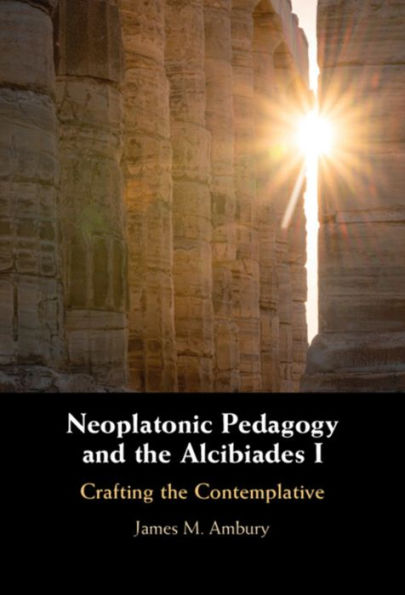
Neoplatonic Pedagogy and the Alcibiades I: Crafting Contemplative in Bloomington, MN
Current price: $110.00

Neoplatonic Pedagogy and the Alcibiades I: Crafting Contemplative in Bloomington, MN
Current price: $110.00
Loading Inventory...
Size: Hardcover
Many philosophers in the ancient world shared a unitary vision of philosophy – meaning 'love of wisdom' – not just as a theoretical discipline, but as a way of life. Specifically, for the late Neoplatonic thinkers, philosophy began with self-knowledge, which led to a person's inner conversion or transformation into a lover, a human being erotically striving toward the totality of the real. This metamorphosis amounted to a complete existential conversion. It was initiated by learned guides who cultivated higher and higher levels of virtue in their students, leading, in the end, to their vision of the Good, or the One. In this book, James M. Ambury closely analyses two central texts in this tradition: the commentaries by Proclus (412–485 AD) and Olympiodorus (495–560 AD) on the Platonic Alcibiades I. Ambury's powerful study illuminates the way philosophy was conceived during a crucial period of its history, in the lecture halls of late antiquity.
Many philosophers in the ancient world shared a unitary vision of philosophy – meaning 'love of wisdom' – not just as a theoretical discipline, but as a way of life. Specifically, for the late Neoplatonic thinkers, philosophy began with self-knowledge, which led to a person's inner conversion or transformation into a lover, a human being erotically striving toward the totality of the real. This metamorphosis amounted to a complete existential conversion. It was initiated by learned guides who cultivated higher and higher levels of virtue in their students, leading, in the end, to their vision of the Good, or the One. In this book, James M. Ambury closely analyses two central texts in this tradition: the commentaries by Proclus (412–485 AD) and Olympiodorus (495–560 AD) on the Platonic Alcibiades I. Ambury's powerful study illuminates the way philosophy was conceived during a crucial period of its history, in the lecture halls of late antiquity.













Find at Mall of America® in Bloomington, MN
Visit at Mall of America® in Bloomington, MN