


Home
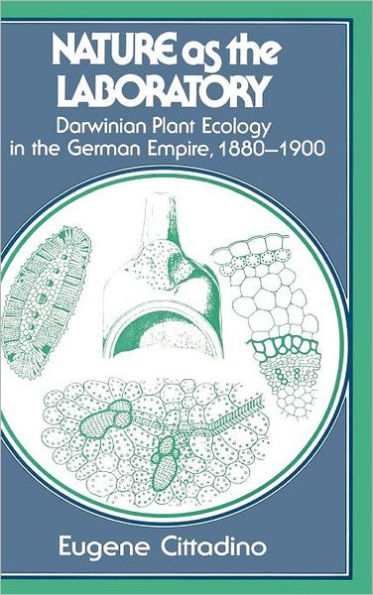
Nature as the Laboratory: Darwinian Plant Ecology in the German Empire, 1880-1900
Barnes and Noble
Loading Inventory...
Nature as the Laboratory: Darwinian Plant Ecology in the German Empire, 1880-1900 in Bloomington, MN
Current price: $127.00

Nature as the Laboratory: Darwinian Plant Ecology in the German Empire, 1880-1900 in Bloomington, MN
Current price: $127.00
Loading Inventory...
Size: OS
The science of botany underwent a dramatic change in the late nineteenth century. A reform movement originating in Germany took the traditionally destructive approach to the study of plant structure and physiology and transformed it into a study of plant adaptation. The young scientists who initiated this approach were influenced by factors both scientific and political. Darwin's natural selection theory and the German Reich's interest in colonial expansion provided the background for a new botanical methodology, which treated Nature as the Laboratory. The work of these botanists, including Gottlieb Haberlandt, Georg Volkens, A. F. W. Schimper, and Ernst Stahl, influenced the subsequent development of botanical science in the twentieth century and contributed significantly to the emergence of the new science of ecology. In this 1990 book, Eugene Cittadino describes in detail their early careers, their zeal for Darwinian selection theory, and their sometimes hazardous expeditions into exotic environments from Africa to the East Indies.
The science of botany underwent a dramatic change in the late nineteenth century. A reform movement originating in Germany took the traditionally destructive approach to the study of plant structure and physiology and transformed it into a study of plant adaptation. The young scientists who initiated this approach were influenced by factors both scientific and political. Darwin's natural selection theory and the German Reich's interest in colonial expansion provided the background for a new botanical methodology, which treated Nature as the Laboratory. The work of these botanists, including Gottlieb Haberlandt, Georg Volkens, A. F. W. Schimper, and Ernst Stahl, influenced the subsequent development of botanical science in the twentieth century and contributed significantly to the emergence of the new science of ecology. In this 1990 book, Eugene Cittadino describes in detail their early careers, their zeal for Darwinian selection theory, and their sometimes hazardous expeditions into exotic environments from Africa to the East Indies.










Find at Mall of America® in Bloomington, MN
Visit at Mall of America® in Bloomington, MN