


Home
Moby-Dick and Melville's Anti-Slavery Allegory
Barnes and Noble
Loading Inventory...
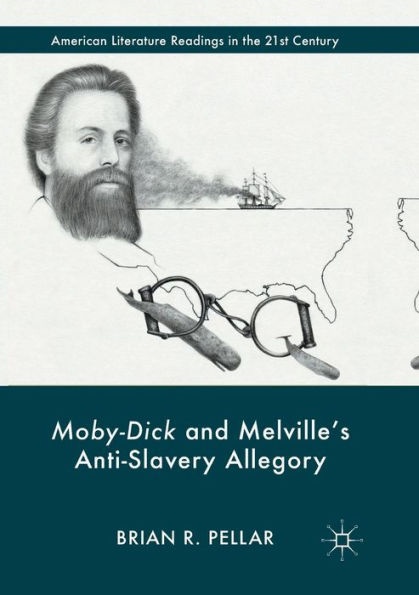
Moby-Dick and Melville's Anti-Slavery Allegory in Bloomington, MN
Current price: $119.99
Moby-Dick and Melville's Anti-Slavery Allegory in Bloomington, MN
Current price: $119.99
Loading Inventory...
Size: Hardcover
This book unfurls and examines the anti-slavery allegory at the subtextual core of Herman Melville’s famed novel, Moby-Dick. Brian Pellar points to symbols and allusions in the novel such as the albinism of the famed whale, the “Ship of State” motif, Calhoun’s “cords,” the equator, Jonah, Narcissus, St. Paul, and Thomas Hobbe’s
Leviathan
. The work contextualizes these devices within a historical discussion of the Compromise of 1850 and subsequently strengthened Fugitive Slave Laws. Drawing on a rich variety of sources such as unpublished papers, letters, reviews, and family memorabilia, the chapters discuss the significance of these laws within Melville’s own life.
After clarifying the hidden allegory interconnecting black slaves and black whales, this book carefully sheds the layers of a hidden meaning that will be too convincing to ignore for future readings: Moby-Dick is ultimately a novel that is intimately connected with questions of race, slavery, and the state.
Leviathan
. The work contextualizes these devices within a historical discussion of the Compromise of 1850 and subsequently strengthened Fugitive Slave Laws. Drawing on a rich variety of sources such as unpublished papers, letters, reviews, and family memorabilia, the chapters discuss the significance of these laws within Melville’s own life.
After clarifying the hidden allegory interconnecting black slaves and black whales, this book carefully sheds the layers of a hidden meaning that will be too convincing to ignore for future readings: Moby-Dick is ultimately a novel that is intimately connected with questions of race, slavery, and the state.
This book unfurls and examines the anti-slavery allegory at the subtextual core of Herman Melville’s famed novel, Moby-Dick. Brian Pellar points to symbols and allusions in the novel such as the albinism of the famed whale, the “Ship of State” motif, Calhoun’s “cords,” the equator, Jonah, Narcissus, St. Paul, and Thomas Hobbe’s
Leviathan
. The work contextualizes these devices within a historical discussion of the Compromise of 1850 and subsequently strengthened Fugitive Slave Laws. Drawing on a rich variety of sources such as unpublished papers, letters, reviews, and family memorabilia, the chapters discuss the significance of these laws within Melville’s own life.
After clarifying the hidden allegory interconnecting black slaves and black whales, this book carefully sheds the layers of a hidden meaning that will be too convincing to ignore for future readings: Moby-Dick is ultimately a novel that is intimately connected with questions of race, slavery, and the state.
Leviathan
. The work contextualizes these devices within a historical discussion of the Compromise of 1850 and subsequently strengthened Fugitive Slave Laws. Drawing on a rich variety of sources such as unpublished papers, letters, reviews, and family memorabilia, the chapters discuss the significance of these laws within Melville’s own life.
After clarifying the hidden allegory interconnecting black slaves and black whales, this book carefully sheds the layers of a hidden meaning that will be too convincing to ignore for future readings: Moby-Dick is ultimately a novel that is intimately connected with questions of race, slavery, and the state.
Shop Similar Products









Find at Mall of America® in Bloomington, MN
Visit at Mall of America® in Bloomington, MN