


Home
Milwaukee's Early Architecture
Barnes and Noble
Loading Inventory...
Milwaukee's Early Architecture in Bloomington, MN
Current price: $24.99

Milwaukee's Early Architecture in Bloomington, MN
Current price: $24.99
Loading Inventory...
Size: Paperback
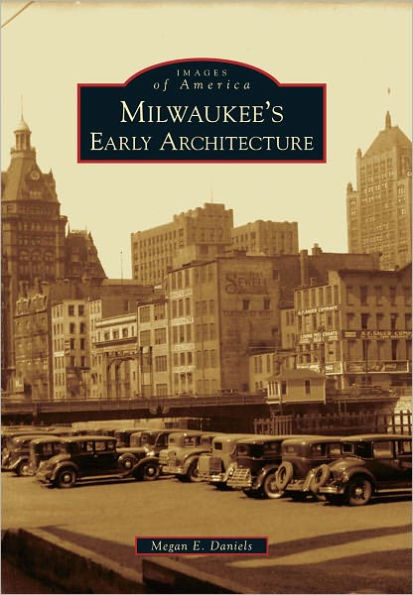
Initially dominated by simple renditions of East Coast architecture, Milwaukee developed from three pioneer settlements, those of Solomon Juneau, Byron Kilbourn, and George Walkerthree hubs from which three villages radiated outward into one city. Following the Civil War, Milwaukee's growth at the onset of the Industrial Era afforded the city a fanciful array of Victorian streetscapes. The 1890s followed with an era of ethnic architecture in which bold interpretations of German Renaissance Revival and Baroque designs paid homage to Milwaukee's overwhelming German population. At the turn of the century, Milwaukee's proximity to Chicago influenced the streetscape with classicized civic structures and skyscrapers designed by Chicago architects. World War I and the ensuing anti-German sentiment, as well as Prohibition, inevitably had adverse effects on Brew City. By the 1920s, Milwaukee's architecture had assimilated to the national aesthetic, suburban development was on the rise, and architectural growth would soon be stunted by the Great Depression.
Initially dominated by simple renditions of East Coast architecture, Milwaukee developed from three pioneer settlements, those of Solomon Juneau, Byron Kilbourn, and George Walkerthree hubs from which three villages radiated outward into one city. Following the Civil War, Milwaukee's growth at the onset of the Industrial Era afforded the city a fanciful array of Victorian streetscapes. The 1890s followed with an era of ethnic architecture in which bold interpretations of German Renaissance Revival and Baroque designs paid homage to Milwaukee's overwhelming German population. At the turn of the century, Milwaukee's proximity to Chicago influenced the streetscape with classicized civic structures and skyscrapers designed by Chicago architects. World War I and the ensuing anti-German sentiment, as well as Prohibition, inevitably had adverse effects on Brew City. By the 1920s, Milwaukee's architecture had assimilated to the national aesthetic, suburban development was on the rise, and architectural growth would soon be stunted by the Great Depression.
Shop Similar Products
















Find at Mall of America® in Bloomington, MN
Visit at Mall of America® in Bloomington, MN