


Home
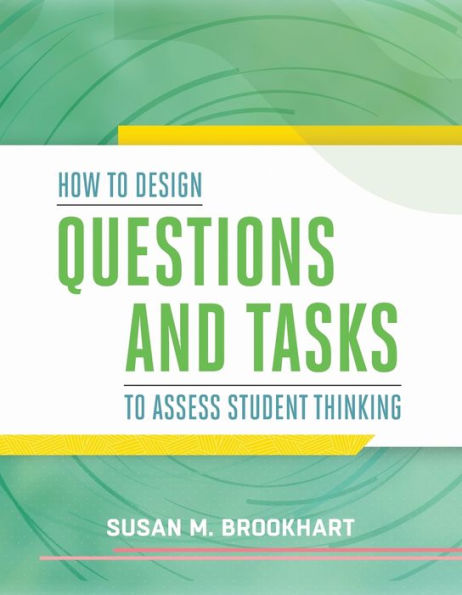
How to Assess Higher-Order Thinking Skills Your Classroom
Barnes and Noble
Loading Inventory...

How to Assess Higher-Order Thinking Skills Your Classroom in Bloomington, MN
Current price: $32.95

How to Assess Higher-Order Thinking Skills Your Classroom in Bloomington, MN
Current price: $32.95
Loading Inventory...
Size: Paperback
Educators know it's important to get students to engage in "higher-order thinking." But what does higher-order thinking actually look like? And how can K-12 classroom teachers assess it across the disciplines? Author, consultant, and former classroom teacher Susan M. Brookhart answers these questions and more in this straightforward, practical guide to assessment that can help teachers determine if students are actually displaying the kind of complex thinking that current content standards emphasize.
Brookhart begins by laying out principles for assessment in general and for assessment of higher-order thinking in particular. She then defines and describes aspects of higher-order thinking according to the categories established in leading taxonomies, giving specific guidance on how to assess students in the following areas:
* Analysis, evaluation, and creation
* Logic and reasoning
* Judgment
* Problem solving
* Creativity and creative thinking
Examples drawn from the National Assessment of Educational Progress and from actual classroom teachers include multiple-choice items, constructed-response (essay) items, and performance assessment tasks. Readers will learn how to use formative assessment to improve student work and then use summative assessment for grading or scoring.
Aimed at elementary, middle, and high school teachers in all subject areas,
How to Assess Higher-Order Thinking Skills in Your Classroom
provides essential background, sound advice, and thoughtful insight into an area of increasing importance for the success of students in the classroom—and in life.
Brookhart begins by laying out principles for assessment in general and for assessment of higher-order thinking in particular. She then defines and describes aspects of higher-order thinking according to the categories established in leading taxonomies, giving specific guidance on how to assess students in the following areas:
* Analysis, evaluation, and creation
* Logic and reasoning
* Judgment
* Problem solving
* Creativity and creative thinking
Examples drawn from the National Assessment of Educational Progress and from actual classroom teachers include multiple-choice items, constructed-response (essay) items, and performance assessment tasks. Readers will learn how to use formative assessment to improve student work and then use summative assessment for grading or scoring.
Aimed at elementary, middle, and high school teachers in all subject areas,
How to Assess Higher-Order Thinking Skills in Your Classroom
provides essential background, sound advice, and thoughtful insight into an area of increasing importance for the success of students in the classroom—and in life.
Educators know it's important to get students to engage in "higher-order thinking." But what does higher-order thinking actually look like? And how can K-12 classroom teachers assess it across the disciplines? Author, consultant, and former classroom teacher Susan M. Brookhart answers these questions and more in this straightforward, practical guide to assessment that can help teachers determine if students are actually displaying the kind of complex thinking that current content standards emphasize.
Brookhart begins by laying out principles for assessment in general and for assessment of higher-order thinking in particular. She then defines and describes aspects of higher-order thinking according to the categories established in leading taxonomies, giving specific guidance on how to assess students in the following areas:
* Analysis, evaluation, and creation
* Logic and reasoning
* Judgment
* Problem solving
* Creativity and creative thinking
Examples drawn from the National Assessment of Educational Progress and from actual classroom teachers include multiple-choice items, constructed-response (essay) items, and performance assessment tasks. Readers will learn how to use formative assessment to improve student work and then use summative assessment for grading or scoring.
Aimed at elementary, middle, and high school teachers in all subject areas,
How to Assess Higher-Order Thinking Skills in Your Classroom
provides essential background, sound advice, and thoughtful insight into an area of increasing importance for the success of students in the classroom—and in life.
Brookhart begins by laying out principles for assessment in general and for assessment of higher-order thinking in particular. She then defines and describes aspects of higher-order thinking according to the categories established in leading taxonomies, giving specific guidance on how to assess students in the following areas:
* Analysis, evaluation, and creation
* Logic and reasoning
* Judgment
* Problem solving
* Creativity and creative thinking
Examples drawn from the National Assessment of Educational Progress and from actual classroom teachers include multiple-choice items, constructed-response (essay) items, and performance assessment tasks. Readers will learn how to use formative assessment to improve student work and then use summative assessment for grading or scoring.
Aimed at elementary, middle, and high school teachers in all subject areas,
How to Assess Higher-Order Thinking Skills in Your Classroom
provides essential background, sound advice, and thoughtful insight into an area of increasing importance for the success of students in the classroom—and in life.
Shop Similar Products






Find at Mall of America® in Bloomington, MN
Visit at Mall of America® in Bloomington, MN