


Home
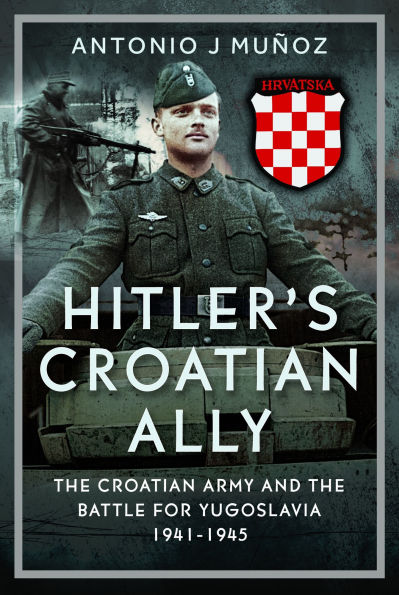
Hitler's Croatian Ally: the Army and Battle for Yugoslavia, 1941-1945
Barnes and Noble
Loading Inventory...
Hitler's Croatian Ally: the Army and Battle for Yugoslavia, 1941-1945 in Bloomington, MN
Current price: $34.95

Hitler's Croatian Ally: the Army and Battle for Yugoslavia, 1941-1945 in Bloomington, MN
Current price: $34.95
Loading Inventory...
Size: Hardcover
Explores the rise and struggle of the Independent State of Croatia during WWII’s brutal Balkans conflict.
On 6 April 1941, Nazi Germany, along with Italy and Hungary, invaded Yugoslavia after the overthrow of the Yugoslav regent, Prince Paul. Hitler sought to secure the right flank for his upcoming invasion of the USSR and assist Mussolini, who had failed to conquer Greece. The German attack was swift, and by 17 April, Yugoslavia capitulated, leading to the creation of the Independent State of Croatia (NDH).
Ante Pavelić, leader of the fascist Ustaše organization, was installed as the head of Croatia. His government immediately began a brutal campaign of repression against nonCroatians, especially Serbs. This sparked rebellions, with Serbian Chetnik bands and Croatian communists forming separate guerrilla movements. The Croatian state was soon overwhelmed by these insurgencies.
Italy further complicated matters by creating occupation zones within Croatia, supporting Chetnik bands, and hampering Croatian military efforts. The Croatian Army, unable to fortify its territory due to Italian restrictions, was often attacked by Chetniks and forced to fight on two fronts.
Despite these challenges, including inadequate armament and the constant interference of its allies, Croatia maintained a military force that continued to fight until the war’s bitter end.
On 6 April 1941, Nazi Germany, along with Italy and Hungary, invaded Yugoslavia after the overthrow of the Yugoslav regent, Prince Paul. Hitler sought to secure the right flank for his upcoming invasion of the USSR and assist Mussolini, who had failed to conquer Greece. The German attack was swift, and by 17 April, Yugoslavia capitulated, leading to the creation of the Independent State of Croatia (NDH).
Ante Pavelić, leader of the fascist Ustaše organization, was installed as the head of Croatia. His government immediately began a brutal campaign of repression against nonCroatians, especially Serbs. This sparked rebellions, with Serbian Chetnik bands and Croatian communists forming separate guerrilla movements. The Croatian state was soon overwhelmed by these insurgencies.
Italy further complicated matters by creating occupation zones within Croatia, supporting Chetnik bands, and hampering Croatian military efforts. The Croatian Army, unable to fortify its territory due to Italian restrictions, was often attacked by Chetniks and forced to fight on two fronts.
Despite these challenges, including inadequate armament and the constant interference of its allies, Croatia maintained a military force that continued to fight until the war’s bitter end.
Explores the rise and struggle of the Independent State of Croatia during WWII’s brutal Balkans conflict.
On 6 April 1941, Nazi Germany, along with Italy and Hungary, invaded Yugoslavia after the overthrow of the Yugoslav regent, Prince Paul. Hitler sought to secure the right flank for his upcoming invasion of the USSR and assist Mussolini, who had failed to conquer Greece. The German attack was swift, and by 17 April, Yugoslavia capitulated, leading to the creation of the Independent State of Croatia (NDH).
Ante Pavelić, leader of the fascist Ustaše organization, was installed as the head of Croatia. His government immediately began a brutal campaign of repression against nonCroatians, especially Serbs. This sparked rebellions, with Serbian Chetnik bands and Croatian communists forming separate guerrilla movements. The Croatian state was soon overwhelmed by these insurgencies.
Italy further complicated matters by creating occupation zones within Croatia, supporting Chetnik bands, and hampering Croatian military efforts. The Croatian Army, unable to fortify its territory due to Italian restrictions, was often attacked by Chetniks and forced to fight on two fronts.
Despite these challenges, including inadequate armament and the constant interference of its allies, Croatia maintained a military force that continued to fight until the war’s bitter end.
On 6 April 1941, Nazi Germany, along with Italy and Hungary, invaded Yugoslavia after the overthrow of the Yugoslav regent, Prince Paul. Hitler sought to secure the right flank for his upcoming invasion of the USSR and assist Mussolini, who had failed to conquer Greece. The German attack was swift, and by 17 April, Yugoslavia capitulated, leading to the creation of the Independent State of Croatia (NDH).
Ante Pavelić, leader of the fascist Ustaše organization, was installed as the head of Croatia. His government immediately began a brutal campaign of repression against nonCroatians, especially Serbs. This sparked rebellions, with Serbian Chetnik bands and Croatian communists forming separate guerrilla movements. The Croatian state was soon overwhelmed by these insurgencies.
Italy further complicated matters by creating occupation zones within Croatia, supporting Chetnik bands, and hampering Croatian military efforts. The Croatian Army, unable to fortify its territory due to Italian restrictions, was often attacked by Chetniks and forced to fight on two fronts.
Despite these challenges, including inadequate armament and the constant interference of its allies, Croatia maintained a military force that continued to fight until the war’s bitter end.
Shop Similar Products







Find at Mall of America® in Bloomington, MN
Visit at Mall of America® in Bloomington, MN