


Home
Handbook on Punishment Decisions: Locations of Disparity
Barnes and Noble
Loading Inventory...
Handbook on Punishment Decisions: Locations of Disparity in Bloomington, MN
Current price: $300.00

Handbook on Punishment Decisions: Locations of Disparity in Bloomington, MN
Current price: $300.00
Loading Inventory...
Size: Hardcover
Handbook on Punishment Decisions: Locations of Disparity
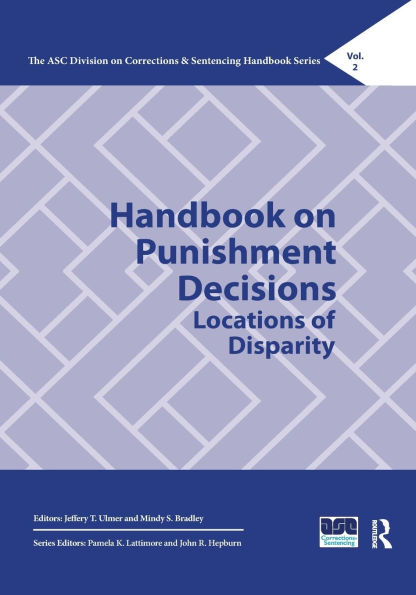
provides a comprehensive assessment of the current knowledge on sites of disparity in punishment decision-making. This collection of essays and reports of original research defines disparity broadly to include the intersection of race/ethnicity, gender, age, citizenship/immigration status, and socioeconomic status, and it examines dimensions such as how pretrial or guilty plea processes shape exposure to punishment, how different types of sentencing decisions and/or policy structures (sentencing guidelines, mandatory minimums, risk assessment tools) might shape and condition disparity, and how post-sentencing decisions involving probation and parole contribute to inequalities. The sixteen contributions pull together what we know and what we don’t about punishment decision-making and plow new ground for further advances in the field.
The ASC Division on Corrections & Sentencing Handbook Series publishes volumes on topics ranging from violence risk assessment to specialty courts for drug users, veterans, or people with mental illness. Each thematic volume focuses on a single topical issue that intersects with corrections and sentencing research.
provides a comprehensive assessment of the current knowledge on sites of disparity in punishment decision-making. This collection of essays and reports of original research defines disparity broadly to include the intersection of race/ethnicity, gender, age, citizenship/immigration status, and socioeconomic status, and it examines dimensions such as how pretrial or guilty plea processes shape exposure to punishment, how different types of sentencing decisions and/or policy structures (sentencing guidelines, mandatory minimums, risk assessment tools) might shape and condition disparity, and how post-sentencing decisions involving probation and parole contribute to inequalities. The sixteen contributions pull together what we know and what we don’t about punishment decision-making and plow new ground for further advances in the field.
The ASC Division on Corrections & Sentencing Handbook Series publishes volumes on topics ranging from violence risk assessment to specialty courts for drug users, veterans, or people with mental illness. Each thematic volume focuses on a single topical issue that intersects with corrections and sentencing research.
Handbook on Punishment Decisions: Locations of Disparity
provides a comprehensive assessment of the current knowledge on sites of disparity in punishment decision-making. This collection of essays and reports of original research defines disparity broadly to include the intersection of race/ethnicity, gender, age, citizenship/immigration status, and socioeconomic status, and it examines dimensions such as how pretrial or guilty plea processes shape exposure to punishment, how different types of sentencing decisions and/or policy structures (sentencing guidelines, mandatory minimums, risk assessment tools) might shape and condition disparity, and how post-sentencing decisions involving probation and parole contribute to inequalities. The sixteen contributions pull together what we know and what we don’t about punishment decision-making and plow new ground for further advances in the field.
The ASC Division on Corrections & Sentencing Handbook Series publishes volumes on topics ranging from violence risk assessment to specialty courts for drug users, veterans, or people with mental illness. Each thematic volume focuses on a single topical issue that intersects with corrections and sentencing research.
provides a comprehensive assessment of the current knowledge on sites of disparity in punishment decision-making. This collection of essays and reports of original research defines disparity broadly to include the intersection of race/ethnicity, gender, age, citizenship/immigration status, and socioeconomic status, and it examines dimensions such as how pretrial or guilty plea processes shape exposure to punishment, how different types of sentencing decisions and/or policy structures (sentencing guidelines, mandatory minimums, risk assessment tools) might shape and condition disparity, and how post-sentencing decisions involving probation and parole contribute to inequalities. The sixteen contributions pull together what we know and what we don’t about punishment decision-making and plow new ground for further advances in the field.
The ASC Division on Corrections & Sentencing Handbook Series publishes volumes on topics ranging from violence risk assessment to specialty courts for drug users, veterans, or people with mental illness. Each thematic volume focuses on a single topical issue that intersects with corrections and sentencing research.
Shop Similar Products
















Find at Mall of America® in Bloomington, MN
Visit at Mall of America® in Bloomington, MN