


Home
God, the invisible king. By: H. G. Wells
Barnes and Noble
Loading Inventory...
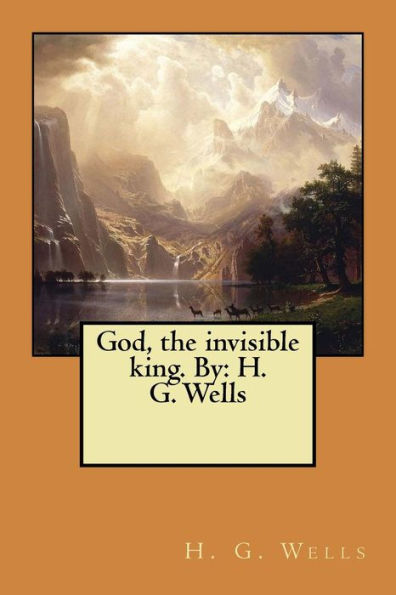
God, the invisible king. By: H. G. Wells in Bloomington, MN
Current price: $8.95

God, the invisible king. By: H. G. Wells in Bloomington, MN
Current price: $8.95
Loading Inventory...
Size: OS
God the Invisible King is a theological tract published by H.G. Wells in 1917.Wells describes his aim as to state "as forcibly and exactly as possible the religious belief of the writer." He distinguishes his religious beliefs from Christianity, and warns readers that he is "particularly uncompromising" on the doctrine of the Trinity, which he blames on "the violent ultimate crystallization of Nicaea. He pleads for a "modern religion" or "renascent religion" that has "no revelation and no founder." Wells rejects any belief related to God as Nature or the Creator, confining himself to the "finite" God "of the human heart." He devotes a chapter to misconceptions about God that are due to mistaken "mental elaboration" as opposed to "heresies of speculation," and says that the God in which he believes has nothing to do with magic, providence, quietism, punishment, the threatening of children, or sexual ethics. Positively, in a chapter entitled "The Likeness of God," he states his belief that God is courage, a person, youth (i.e. forward- rather than backward-looking), and love
God the Invisible King is a theological tract published by H.G. Wells in 1917.Wells describes his aim as to state "as forcibly and exactly as possible the religious belief of the writer." He distinguishes his religious beliefs from Christianity, and warns readers that he is "particularly uncompromising" on the doctrine of the Trinity, which he blames on "the violent ultimate crystallization of Nicaea. He pleads for a "modern religion" or "renascent religion" that has "no revelation and no founder." Wells rejects any belief related to God as Nature or the Creator, confining himself to the "finite" God "of the human heart." He devotes a chapter to misconceptions about God that are due to mistaken "mental elaboration" as opposed to "heresies of speculation," and says that the God in which he believes has nothing to do with magic, providence, quietism, punishment, the threatening of children, or sexual ethics. Positively, in a chapter entitled "The Likeness of God," he states his belief that God is courage, a person, youth (i.e. forward- rather than backward-looking), and love
Shop Similar Products















Find at Mall of America® in Bloomington, MN
Visit at Mall of America® in Bloomington, MN