


Home
Electron Paramagnetic Resonance and Infrared Spectroscopy
Barnes and Noble
Loading Inventory...
Electron Paramagnetic Resonance and Infrared Spectroscopy in Bloomington, MN
Current price: $39.00

Electron Paramagnetic Resonance and Infrared Spectroscopy in Bloomington, MN
Current price: $39.00
Loading Inventory...
Size: OS
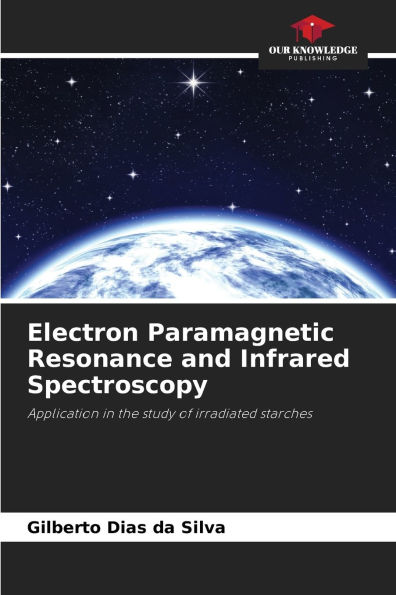
Starch is the most abundant of the energy-storing polysaccharides in plants, usually deposited in the form of granules in the cytoplasm of cells. It is also the main source of energy for humans, making up 80-90% of the polysaccharides in the human diet, and is mainly responsible for the technological properties that characterize most processed products. The aim of this study was to apply electron paramagnetic resonance (EPR) and Fourier transform infrared spectroscopy (FTIR) to the study of irradiated starches. Powdered samples of two natural starches, potato (bulb) and corn (cereal) and fermented cassava flour or sour starch (root) were subjected to ionizing radiation from a 60Co Gammacell 220 source at doses of 10, 20 and 30 kGy, at a dose rate of 1kGy h-1. The RPE spectra of the three types of irradiated and non-irradiated starch were recorded and compared. The starches showed similar RPE spectra, varying only in the intensity of the free radical signal which accompanied the increase in dose.
Starch is the most abundant of the energy-storing polysaccharides in plants, usually deposited in the form of granules in the cytoplasm of cells. It is also the main source of energy for humans, making up 80-90% of the polysaccharides in the human diet, and is mainly responsible for the technological properties that characterize most processed products. The aim of this study was to apply electron paramagnetic resonance (EPR) and Fourier transform infrared spectroscopy (FTIR) to the study of irradiated starches. Powdered samples of two natural starches, potato (bulb) and corn (cereal) and fermented cassava flour or sour starch (root) were subjected to ionizing radiation from a 60Co Gammacell 220 source at doses of 10, 20 and 30 kGy, at a dose rate of 1kGy h-1. The RPE spectra of the three types of irradiated and non-irradiated starch were recorded and compared. The starches showed similar RPE spectra, varying only in the intensity of the free radical signal which accompanied the increase in dose.










Find at Mall of America® in Bloomington, MN
Visit at Mall of America® in Bloomington, MN