


Home
Buddhist (Post) Modernism in Robert Hass's Early Poetry and Poetics: "The Fullness of Desire"
Barnes and Noble
Loading Inventory...
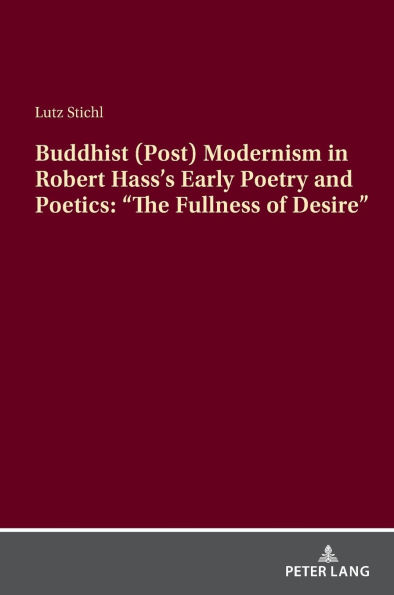
Buddhist (Post) Modernism in Robert Hass's Early Poetry and Poetics: "The Fullness of Desire" in Bloomington, MN
Current price: $86.95

Buddhist (Post) Modernism in Robert Hass's Early Poetry and Poetics: "The Fullness of Desire" in Bloomington, MN
Current price: $86.95
Loading Inventory...
Size: OS
This book is the first sustained scholarly effort to analyze reflections of Far Eastern, especially Buddhist-inspired, aesthetics, culture, and philosophy in the poetry and criticism of Robert Hass. Three main concerns of his work can be examined through Hass’s reception of Buddhist ideas. Firstly, poetic-ontological perspectives on the self and desire, influenced by the concepts of anatta (non-self ) and tanha (craving). Secondly, appreciations of the sublime in the near-at-hand, i.e., a Buddhist understanding of interdependence. Lastly, Hass’s negative capability in the face of philosophical discussions concerning the limits of language. These concerns manifest themselves in an idealistic understanding of the haiku and in a Buddhist-Romantic effort to foster a more intimate relationship with nature. Additionally, they become evident in an ecopoetic desire to combat the abstractions and aberrations of modernity through Far Eastern aesthetics, as well as in a Buddhistderived understanding of paradox as a means of transcendence.
This book is the first sustained scholarly effort to analyze reflections of Far Eastern, especially Buddhist-inspired, aesthetics, culture, and philosophy in the poetry and criticism of Robert Hass. Three main concerns of his work can be examined through Hass’s reception of Buddhist ideas. Firstly, poetic-ontological perspectives on the self and desire, influenced by the concepts of anatta (non-self ) and tanha (craving). Secondly, appreciations of the sublime in the near-at-hand, i.e., a Buddhist understanding of interdependence. Lastly, Hass’s negative capability in the face of philosophical discussions concerning the limits of language. These concerns manifest themselves in an idealistic understanding of the haiku and in a Buddhist-Romantic effort to foster a more intimate relationship with nature. Additionally, they become evident in an ecopoetic desire to combat the abstractions and aberrations of modernity through Far Eastern aesthetics, as well as in a Buddhistderived understanding of paradox as a means of transcendence.
Shop Similar Products

















Find at Mall of America® in Bloomington, MN
Visit at Mall of America® in Bloomington, MN