


Home
Biosensors: Properties, Materials and Applications
Barnes and Noble
Loading Inventory...
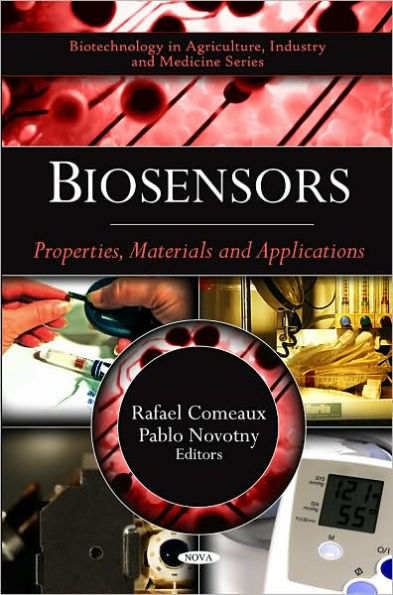
Biosensors: Properties, Materials and Applications in Bloomington, MN
Current price: $129.00

Biosensors: Properties, Materials and Applications in Bloomington, MN
Current price: $129.00
Loading Inventory...
Size: OS
A biosensor is an analytical device which converts a biological response into an electrical signal. It consists of 3 parts: the sensitive biological element, the transducer and the associated electronics or signal processors that are primarily responsible for the display of the results in a user-friendly way. The most widespread example of a commercial biosensor is the blood glucose biosensor. Recently, arrays of many different detector molecules have been applied in so-called electronic nose devices, where the pattern of response from the detectors is used to fingerprint a substance. There are also several applications of biosensors in food analysis. Optical sensors are used to detect pathogens and food toxins. Thus, the light system in these biosensors has been fluorescence, since this type of optical measurement can greatly amplify the signal. This book will present research on new materials, technologies as well as applications in the field of biosensors.
A biosensor is an analytical device which converts a biological response into an electrical signal. It consists of 3 parts: the sensitive biological element, the transducer and the associated electronics or signal processors that are primarily responsible for the display of the results in a user-friendly way. The most widespread example of a commercial biosensor is the blood glucose biosensor. Recently, arrays of many different detector molecules have been applied in so-called electronic nose devices, where the pattern of response from the detectors is used to fingerprint a substance. There are also several applications of biosensors in food analysis. Optical sensors are used to detect pathogens and food toxins. Thus, the light system in these biosensors has been fluorescence, since this type of optical measurement can greatly amplify the signal. This book will present research on new materials, technologies as well as applications in the field of biosensors.
Shop Similar Products















Find at Mall of America® in Bloomington, MN
Visit at Mall of America® in Bloomington, MN