


Home
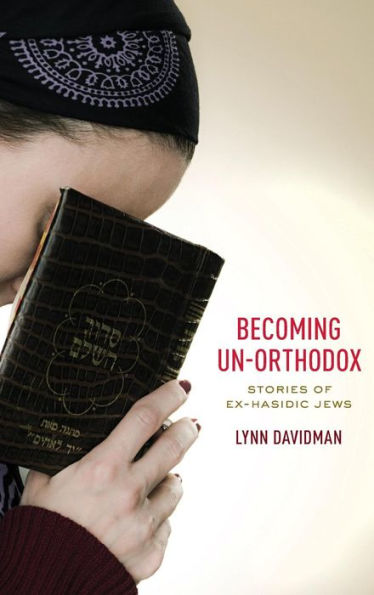
Becoming Un-Orthodox: Stories of Ex-Hasidic Jews
Barnes and Noble
Loading Inventory...
Becoming Un-Orthodox: Stories of Ex-Hasidic Jews in Bloomington, MN
Current price: $40.99

Becoming Un-Orthodox: Stories of Ex-Hasidic Jews in Bloomington, MN
Current price: $40.99
Loading Inventory...
Size: Hardcover
Leaving a religion is not merely a matter of losing or rejecting faith. For many, it involves dramatic changes of everyday routines and personal habits.
Davidman bases her analysis on in-depth conversations with forty ex-Hasidic individuals. From these conversations emerge accounts of the great fear, angst, and sense of danger that come of leaving a highly bounded enclave community. Many of those interviewed spoke of feeling marginal in their own communities; of strain in their homes due to death, divorce, or their parents' profound religious differences; experienced sexual, physical, or verbal abuse; or expressed an acute awareness of gender inequality, the dissimilar lives of their secular relatives, and forbidden television shows, movies, websites, and books.
Becoming Un-Orthodox
draws much-needed attention to the vital role of the body and bodily behavior in religious practices. It is through physical rituals and routines that the members of a religion, particularly a highly conservative one, constantly create, perform, and reinforce the culture of the religion. Because of the many observances and daily rituals required by their faith, Hasidic defectors are an exemplary case study for exploring the centrality of the body in shaping, maintaining, and shedding religions.
This book provides both a moving narrative of the struggles of Hasidic defectors and a compelling call for greater collective understanding of the complex significance of the body in society.
Davidman bases her analysis on in-depth conversations with forty ex-Hasidic individuals. From these conversations emerge accounts of the great fear, angst, and sense of danger that come of leaving a highly bounded enclave community. Many of those interviewed spoke of feeling marginal in their own communities; of strain in their homes due to death, divorce, or their parents' profound religious differences; experienced sexual, physical, or verbal abuse; or expressed an acute awareness of gender inequality, the dissimilar lives of their secular relatives, and forbidden television shows, movies, websites, and books.
Becoming Un-Orthodox
draws much-needed attention to the vital role of the body and bodily behavior in religious practices. It is through physical rituals and routines that the members of a religion, particularly a highly conservative one, constantly create, perform, and reinforce the culture of the religion. Because of the many observances and daily rituals required by their faith, Hasidic defectors are an exemplary case study for exploring the centrality of the body in shaping, maintaining, and shedding religions.
This book provides both a moving narrative of the struggles of Hasidic defectors and a compelling call for greater collective understanding of the complex significance of the body in society.
Leaving a religion is not merely a matter of losing or rejecting faith. For many, it involves dramatic changes of everyday routines and personal habits.
Davidman bases her analysis on in-depth conversations with forty ex-Hasidic individuals. From these conversations emerge accounts of the great fear, angst, and sense of danger that come of leaving a highly bounded enclave community. Many of those interviewed spoke of feeling marginal in their own communities; of strain in their homes due to death, divorce, or their parents' profound religious differences; experienced sexual, physical, or verbal abuse; or expressed an acute awareness of gender inequality, the dissimilar lives of their secular relatives, and forbidden television shows, movies, websites, and books.
Becoming Un-Orthodox
draws much-needed attention to the vital role of the body and bodily behavior in religious practices. It is through physical rituals and routines that the members of a religion, particularly a highly conservative one, constantly create, perform, and reinforce the culture of the religion. Because of the many observances and daily rituals required by their faith, Hasidic defectors are an exemplary case study for exploring the centrality of the body in shaping, maintaining, and shedding religions.
This book provides both a moving narrative of the struggles of Hasidic defectors and a compelling call for greater collective understanding of the complex significance of the body in society.
Davidman bases her analysis on in-depth conversations with forty ex-Hasidic individuals. From these conversations emerge accounts of the great fear, angst, and sense of danger that come of leaving a highly bounded enclave community. Many of those interviewed spoke of feeling marginal in their own communities; of strain in their homes due to death, divorce, or their parents' profound religious differences; experienced sexual, physical, or verbal abuse; or expressed an acute awareness of gender inequality, the dissimilar lives of their secular relatives, and forbidden television shows, movies, websites, and books.
Becoming Un-Orthodox
draws much-needed attention to the vital role of the body and bodily behavior in religious practices. It is through physical rituals and routines that the members of a religion, particularly a highly conservative one, constantly create, perform, and reinforce the culture of the religion. Because of the many observances and daily rituals required by their faith, Hasidic defectors are an exemplary case study for exploring the centrality of the body in shaping, maintaining, and shedding religions.
This book provides both a moving narrative of the struggles of Hasidic defectors and a compelling call for greater collective understanding of the complex significance of the body in society.
Shop Similar Products










Find at Mall of America® in Bloomington, MN
Visit at Mall of America® in Bloomington, MN