


Home
An Overview of Optical Computing and its Components
Barnes and Noble
Loading Inventory...
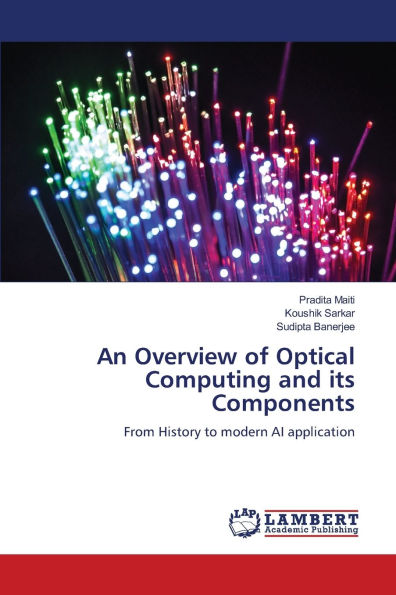
An Overview of Optical Computing and its Components in Bloomington, MN
Current price: $66.00

An Overview of Optical Computing and its Components in Bloomington, MN
Current price: $66.00
Loading Inventory...
Size: OS
"An Overview of Optical Computing and its Components" offers an in-depth introduction to the developing field of optical computing, which leverages light instead of traditional electronic signals for computations. The book examines the fundamental concepts behind optical computing, emphasizing how the distinctive characteristics of light-such as speed, parallel processing capabilities, and energy efficiency-can address the limitations of conventional electronic computing systems. It explores the key components that are essential to optical computing systems, including optical fibers, waveguides, optical modulators, photodetectors, beam splitters, combiners, nonlinear optical materials, and integrated photonics. The book illustrates how each of these elements plays a crucial role in the operation of optical computers, facilitating faster data processing and lower energy consumption compared to electronic systems. Additionally, the book covers the practical uses of optical computing in fields such as artificial intelligence, machine learning, and high-performance computing, highlighting its potential to transform industries by efficiently managing large-scale, data-heavy tasks.
"An Overview of Optical Computing and its Components" offers an in-depth introduction to the developing field of optical computing, which leverages light instead of traditional electronic signals for computations. The book examines the fundamental concepts behind optical computing, emphasizing how the distinctive characteristics of light-such as speed, parallel processing capabilities, and energy efficiency-can address the limitations of conventional electronic computing systems. It explores the key components that are essential to optical computing systems, including optical fibers, waveguides, optical modulators, photodetectors, beam splitters, combiners, nonlinear optical materials, and integrated photonics. The book illustrates how each of these elements plays a crucial role in the operation of optical computers, facilitating faster data processing and lower energy consumption compared to electronic systems. Additionally, the book covers the practical uses of optical computing in fields such as artificial intelligence, machine learning, and high-performance computing, highlighting its potential to transform industries by efficiently managing large-scale, data-heavy tasks.
Shop Similar Products












Find at Mall of America® in Bloomington, MN
Visit at Mall of America® in Bloomington, MN