


Home
a Black Jurist Slave Society: Antonio Pereira Rebouças and the Trials of Brazilian Citizenship
Barnes and Noble
Loading Inventory...
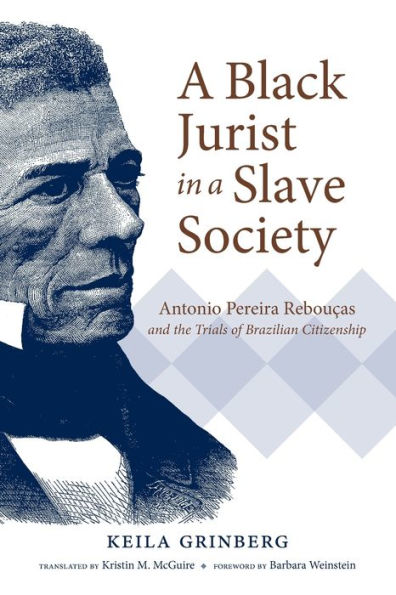
a Black Jurist Slave Society: Antonio Pereira Rebouças and the Trials of Brazilian Citizenship in Bloomington, MN
Current price: $34.95

a Black Jurist Slave Society: Antonio Pereira Rebouças and the Trials of Brazilian Citizenship in Bloomington, MN
Current price: $34.95
Loading Inventory...
Size: Paperback
Now in English for the first time, Keila Grinberg’s compelling study of the nineteenthcentury jurist Antonio Pereira Rebouças (1798–1880) traces the life of an AfroBrazilian intellectual who rose from a humble background to play a key — and conflicted — role as Brazilians struggled to define citizenship and understand racial politics. One of the most prominent specialists in civil law of his time, Rebouças explained why blacks fought stridently for their own inclusion in society but also complicitly embraced an ethic of silence on race more broadly. Grinberg argues that while this silence was crucial for defining spaces of social mobility and respectability regardless of race, it was also stifling, and played an important role in quelling political mobilization based on racial identity.
Rebouças’s commitment to liberal ideals also exemplifies the contradiction he embodied: though he rejected movements that were grounded in racial political mobilization, he was consistently treated as potentially dangerous for the single fact that he was of African origin. Grinberg demonstrates how Rebouças’s life and career—encompassing such themes as racial politics and identities, slavery and racism, and imperfect citizenship—are central for our understanding of Atlantic slave and postabolition societies.
Rebouças’s commitment to liberal ideals also exemplifies the contradiction he embodied: though he rejected movements that were grounded in racial political mobilization, he was consistently treated as potentially dangerous for the single fact that he was of African origin. Grinberg demonstrates how Rebouças’s life and career—encompassing such themes as racial politics and identities, slavery and racism, and imperfect citizenship—are central for our understanding of Atlantic slave and postabolition societies.
Now in English for the first time, Keila Grinberg’s compelling study of the nineteenthcentury jurist Antonio Pereira Rebouças (1798–1880) traces the life of an AfroBrazilian intellectual who rose from a humble background to play a key — and conflicted — role as Brazilians struggled to define citizenship and understand racial politics. One of the most prominent specialists in civil law of his time, Rebouças explained why blacks fought stridently for their own inclusion in society but also complicitly embraced an ethic of silence on race more broadly. Grinberg argues that while this silence was crucial for defining spaces of social mobility and respectability regardless of race, it was also stifling, and played an important role in quelling political mobilization based on racial identity.
Rebouças’s commitment to liberal ideals also exemplifies the contradiction he embodied: though he rejected movements that were grounded in racial political mobilization, he was consistently treated as potentially dangerous for the single fact that he was of African origin. Grinberg demonstrates how Rebouças’s life and career—encompassing such themes as racial politics and identities, slavery and racism, and imperfect citizenship—are central for our understanding of Atlantic slave and postabolition societies.
Rebouças’s commitment to liberal ideals also exemplifies the contradiction he embodied: though he rejected movements that were grounded in racial political mobilization, he was consistently treated as potentially dangerous for the single fact that he was of African origin. Grinberg demonstrates how Rebouças’s life and career—encompassing such themes as racial politics and identities, slavery and racism, and imperfect citizenship—are central for our understanding of Atlantic slave and postabolition societies.
Shop Similar Products













Find at Mall of America® in Bloomington, MN
Visit at Mall of America® in Bloomington, MN